
What if the secret to enjoying a peaceful Saturday at Holden’s Trout Brook Recreation Area isn’t a shorter leash, but a well-timed “paws up”? As the only Certified Behavior Consultant Canine-Knowledge Assessed (CBCC-KA) professional in the Worcester area, I’ve observed that approximately 85% of reactive behaviors are actually cries for help from an anxious mind. You likely agree that it’s heartbreaking for a dog parent to feel trapped at home because their furry beloved companion lunges at every car on Shrewsbury Street. It’s time to stop hiding and start healing through the science of play.
In this article, you’ll discover how to use cognitive training as a bridge to a calmer life. We’ll explore 15 specific dog tricks to teach that serve as a form of gentle exposure therapy, building the impulse control your dog needs to navigate busy Central MA parks. Using my expertise as a CPDT-KA and a Grisha Stewart Academy BAT Advocate, I’ll show you how to address the psychological roots of fear. You’ll gain the practical skills needed to transform your bond and finally feel empowered to enjoy public outings with your dog once again.
Key Takeaways
- Learn how cognitive enrichment builds new neural pathways to help your furry baby stay focused and calm even in distracting environments.
- Discover the essential dog tricks to teach that create a “bubble of safety,” allowing you and your pup to navigate Worcester’s busy streets with total peace of mind.
- Empower your reactive dog by using body-awareness movements to replace fear with confidence and a sense of emotional control.
- Master the art of transitioning training from your living room to local Holden parks using compassionate, science-based exposure techniques.
- See how working with the only CBCC-KA certified trainer in the Worcester area provides the specialized psychological support your anxious dog deserves.
Why Dog Tricks are Secret Weapons for Behavior Modification in Central MA
When you think about training your dog in Holden, your mind might jump to basic “sit” and “stay” commands or perhaps a long hike through Moore State Park. As the only Certified Behavior Consultant Canine-Knowledge Assessed (CBCC-KA) in the Worcester area, I see things differently. I view trick training as a sophisticated form of cognitive enrichment. It is not just about showing off at a backyard BBQ; it is about building robust neural pathways that help your dog focus in a world full of distractions. These dog tricks to teach are actually secret tools for emotional regulation.
There is a massive difference between “parlor tricks” and true cognitive training. While a parlor trick is a rote physical movement, cognitive training engages your dog’s brain to solve problems. This mental workout is vital for their emotional health. In fact, a 15 minute session of focused trick training can be as exhausting for your pup as a two mile walk near the reservoir. Your dog’s brain needs a workout just as much as their legs do. As your “Expert Friend” and canine advocate, I want you to see that every time your dog learns a new trick, they are actually learning how to learn, which makes them more resilient when life gets stressful.
The Science of Positive Reinforcement and Joy
Science tells us that trick training is a powerful antidote to anxiety. When we use the principles of operant conditioning to reward a dog for a new behavior, their brain releases dopamine. This “feel-good” chemical directly counters cortisol, the hormone associated with stress and fear. At I Wuff You Dog Training, we rely on these evidence-based methods because they work without the need for outdated “alpha” dominance theories that only serve to damage the human-canine bond.
Instead of suppressing your dog’s personality, we use cognitive training as a method to improve a dog’s decision-making skills. By teaching your dog how to think through a trick, you are giving them the tools to make better choices when they see a squirrel or another dog on a walk. This approach, backed by my CPDT-KA certification and my work as a Grisha Stewart Academy BAT Advocate, ensures we are treating the underlying mental state, not just the symptom.
Addressing the ‘Discouraged Parent’ Syndrome
I know the heartbreak of being a “discouraged parent.” Living with a reactive dog in a bustling area like Worcester can feel isolating. You might feel like you can’t go to the park or enjoy a local patio because your dog lunges or barks. I want to empower you: reactivity does not have to mean a life of “staying inside.” Small wins in your living room with simple dog tricks to teach create a foundation of confidence. These wins translate to big victories on the leash because your dog starts looking to you for guidance rather than reacting to the environment.
We use specialized techniques like exposure therapy and Behavior Adjustment Training (BAT 3.0) to help dogs dealing with deep-seated fear or trauma. By seeing your dog as a complex, emotional being, we can move toward a calm, relaxed state together. Here is why trick training helps the discouraged parent:
- It shifts the focus from “fixing a problem” to “having fun” together.
- It builds a “language” of communication that works even when your dog is nervous.
- It provides a safe way to practice focus in low-stress environments before moving to busier Holden streets.
- It reminds you why you fell in love with your furry baby in the first place.
Your dog deserves a life free from fear, and you deserve a partnership built on trust. We’ve got their paw, and we’ve got your back as you navigate this journey toward a happier, more balanced life.
Essential Focus Tricks to Help Your Dog Navigate Worcester’s Busy Streets
Walking down Main Street in Worcester or exploring the crowded trails in Holden requires more than just a sturdy leash. It requires a deep mental connection between you and your furry beloved companion. As the only Certified Behavior Consultant Canine-Knowledge Assessed (CBCC-KA) in the Worcester area, I’ve seen how specific focus tricks create a vital bubble of safety. These aren’t just for show; they’re cognitive tools that help your dog feel secure in a world that often feels too loud or too fast. By prioritizing the dog’s internal emotional state, we move beyond basic obedience into true behavioral wellness.
The foundation of all public success is the “Check-in.” This happens when your dog chooses to look at you amidst distractions without being prompted. When you reward these voluntary glances, you’re building a bridge to successful reactive dog training. For the 85 percent of dogs who struggle with fear-based reactivity, these check-ins signal that they don’t have to manage the environment alone. We’ve got their paw! This psychological approach ensures that your dog remains in a thinking state rather than a reacting state, even when a noisy truck rattles past.
The ‘Touch’ or Hand Target
Teaching your dog to boop their nose against your palm is a redirection lifesaver. To start, hold your flat palm two inches from your dog’s nose. The moment they sniff or touch it, say “Yes!” and offer a high-value treat. Repeat this until they’re eagerly targeting your hand from several feet away. This is one of the most functional dog tricks to teach because it moves a fearful dog away from a trigger without the tension of a pulled leash. This simple movement provides a massive Confidence Boost by giving the dog a clear, successful task to perform. If you’re walking near the Worcester Common and feel your pup getting stiff, a quick “Touch” cue can pivot them 180 degrees into a positive interaction with you.
The ‘Middle’ Position
The “Middle” trick involves your dog sitting between your legs, facing forward. This position offers a physical and emotional “hug” that provides grounding for anxious pups. For Holden parents training in high-distraction environments, this is a game changer. The physical contact of your legs against their sides acts as a sensory anchor, lowering their heart rate during stressful moments. This is a practical application of exposure therapy; we’re teaching the dog that they can observe the world from a place of total protection. Use this when you’re waiting at a busy crosswalk in Shrewsbury or West Boylston. Instead of your dog scanning for threats, they’re tucked safely in their “Middle” station, feeling your calm energy.
My work as a CPDT-KA and a Behavior Adjustment Training (BAT) Advocate focuses on these evidence-based psychological shifts. We don’t just want a dog that sits; we want a dog that feels safe enough to relax. If you’re a discouraged parent dealing with complex fear or trauma, don’t stay home. These dog tricks to teach are the first steps toward a liberated life together. If you’re ready to transform your walks from a chore into a joy, you can view our specialized training programs to find the right fit for your family.
Cognitive Tricks That Build Confidence in Reactive or Anxious Dogs
Reactivity isn’t a permanent personality trait; it’s an emotional response to a world that feels overwhelming. When your furry beloved companion lunges or barks, they aren’t being “bad.” They’re communicating fear. As the only Certified Behavior Consultant Canine-Knowledge Assessed (CBCC-KA) in the Worcester area, I focus on shifting your dog’s mental state from a place of panic to a place of curiosity. We use cognitive dog tricks to teach your pup how to navigate their environment with agency. This psychological approach moves beyond basic obedience. It utilizes principles of Behavior Adjustment Training (BAT 3.0) to help dogs process triggers through problem-solving rather than mindless reaction.
We treat these tricks as a gentle form of exposure therapy. By practicing in a controlled, low-stress environment, your dog learns they can handle challenges. This builds a reservoir of confidence they can draw from when they see a “scary” stimulus later. We’re essentially rewiring the brain. Instead of seeing a stranger and thinking “danger,” your dog begins to look to you and think “what’s the plan?” This partnership is the heart of what we do at I Wuff You. We’ve got their paw through every step of this journey.
Body Awareness: ‘Back Up’ and ‘Paws Up’
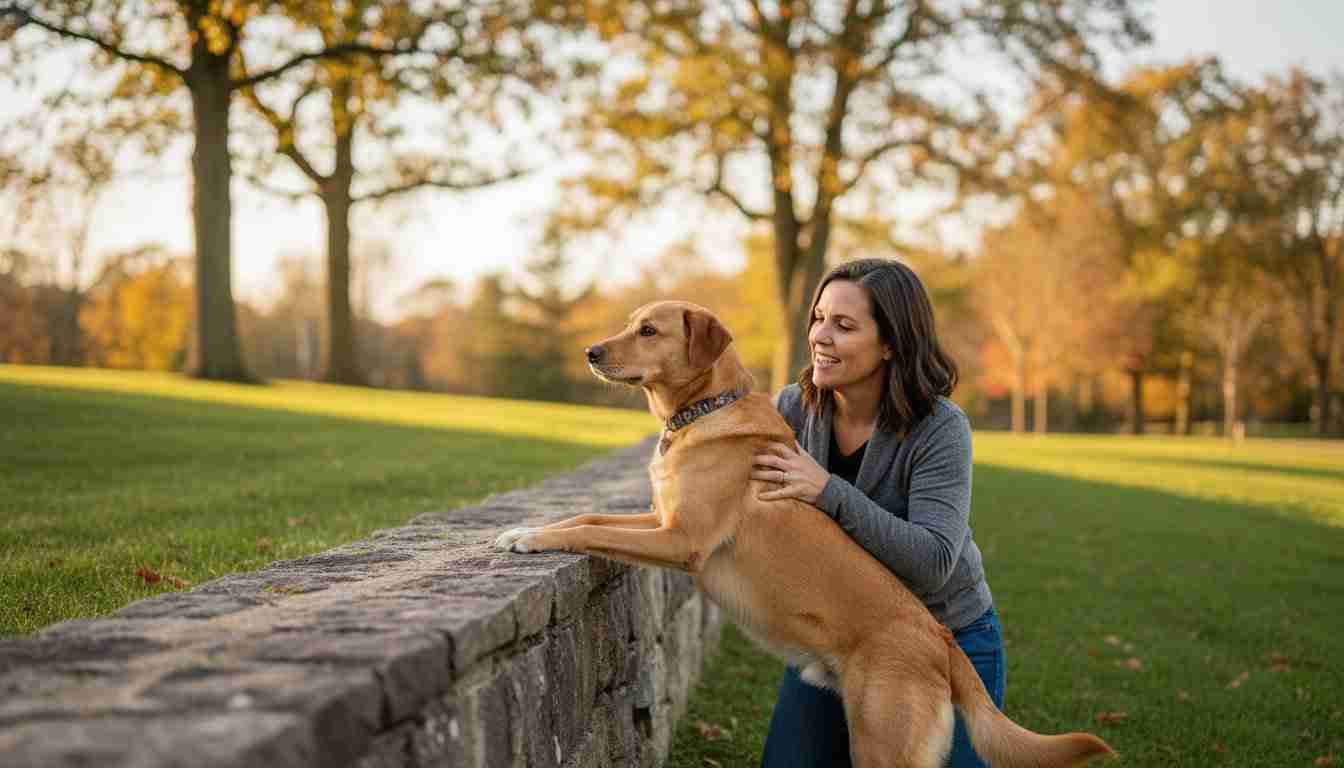
Proprioception, or body awareness, is a game-changer for anxious dogs. Many pups don’t actually realize they have back legs! When a dog understands where their body is in space, they feel more secure and less vulnerable. To teach ‘Back Up’, stand in front of your dog and take a small step toward them. As they naturally shift a paw backward to maintain their personal space, mark that moment with a “Yes!” and a treat. Eventually, they’ll learn to reverse on cue. This trick is one of the most empowering dog tricks to teach because it gives them a physical way to create distance from things that scare them. When you’re out at Trout Brook, try ‘Paws Up’ on a sturdy park bench. This elevation change helps them view the environment from a new perspective, building environmental confidence one paw at a time.
Impulse Control: ‘Wait’ and ‘Leave It’
Impulse control is the difference between a dog that reacts and a dog that thinks. We distinguish between ‘Stay’ and ‘Wait’ to give your dog clarity. A ‘Stay’ means “don’t move until I come back to you,” while a ‘Wait’ is a temporary pause before they get to move forward. This distinction reduces the frustration that often leads to outbursts. We teach ‘Leave It’ as a fun cognitive game. Instead of using harsh corrections, we reward the dog for choosing to look away from a distraction. This is vital for those Holden backyards where squirrels are a constant temptation. By turning ‘Leave It’ into a choice rather than a demand, we empower your dog to manage their own emotions. This evidence-based approach, backed by my CPDT-KA certification, ensures your pup stays calm even when the local wildlife gets active. Your dog deserves a life free from constant anxiety; these tricks are the first step toward that peace.
Helping a reactive dog requires more than just treats; it requires a deep understanding of canine psychology. Through my work with the Grisha Stewart Academy as a BAT Advocate, I’ve helped hundreds of discouraged parents find hope again. We don’t just train dogs; we coach families to build a bond based on trust and mutual respect. You don’t have to hide your dog away from the world. With the right techniques and a compassionate advocate by your side, your pup can learn to love their walks again. Let’s start building that confidence today!
Practice Makes Perfect: Training Tricks at Holden and Worcester Parks
Mastering a spin in your Holden living room is a fantastic start, but true confidence grows when your furry beloved companion can perform under the blue skies of Central Massachusetts. Transitioning to the real world feels daunting for many dog parents, especially if your pup struggles with reactivity or anxiety. These big emotions don’t have to keep you housebound. As the only Certified Behavior Consultant Canine-Knowledge Assessed (CBCC-KA) in the Worcester area, I specialize in moving beyond basic obedience to address the underlying psychological state of your dog. My approach combines my CPDT-KA credentials with my role as a Behavior Adjustment Training (BAT) Advocate at the Grisha Stewart Academy to help your dog reach a calm, relaxed state in any environment.
Safety is the foundation of every successful outing. Worcester City Ordinance Chapter 8, Section 31 requires all dogs to be on a leash no longer than 6 feet in public spaces. Adhering to this law isn’t just about compliance; it’s about providing your dog with a clear sense of security. When you’re looking for new dog tricks to teach, consider how these movements can help your pup navigate public spaces with ease. We use Behavior Adjustment Training (BAT) to give your dog a sense of agency, allowing them to gather information about their surroundings without feeling the need to bark or lunge. This method transforms a stressful walk into a therapeutic “sniffari” where your dog learns to make better choices on their own through positive reinforcement and psychological support.
I want to empower every parent who feels discouraged by their dog’s lunging or barking. Reactivity is simply a communication of fear or overstimulation, and it’s something we can manage together. By using science-based methods, we can lower your dog’s cortisol levels and replace panic with curiosity. You don’t have to wait for your dog to be “perfect” to enjoy the beauty of our local parks; you just need the right tools and a compassionate plan to handle the world together, one paw at a time.
Top Local Spots for Low-Stress Practice
Moore State Park in Holden offers 400 acres of landscape, but the key is finding quiet corners. Head toward the stone mill before 8:30 AM to avoid 65% of the daily foot traffic. This peace allows your dog to focus. At Cascades Park in Worcester, use natural features for dog tricks to teach, like “paws up” on a granite boulder to build proprioception and mental resilience in a low-pressure setting.
Exposure Therapy: The Gentle Approach
We use trick training as gentle exposure therapy to change how your dog feels about triggers. By asking for a familiar trick when a trigger is at a safe distance, we create positive neural pathways. We always respect your dog’s threshold, the specific distance where they stay relaxed. Exposure therapy must be done at the dog’s pace to ensure a calm state, focusing on healing rather than forced confrontation.
Elevating Your Bond with Expert Behavior Coaching in Holden, MA
Teaching your pup a high-five or a roll over is a blast. However, sometimes the list of dog tricks to teach isn’t enough to solve deep-seated emotional struggles. While basic cues build a foundation, complex behavioral issues like lunging, barking, or extreme fear require a specialist. This is where the guidance of a highly certified dog trainer becomes essential for your family’s peace of mind. We don’t just look at what your dog is doing; we look at how they are feeling.
Cristina Galanek brings a level of expertise that is truly rare in Central Massachusetts. She holds the CPDT-KA (Certified Professional Dog Trainer-Knowledge Assessed) and the prestigious CBCC-KA (Certified Behavior Consultant Canine-Knowledge Assessed) credentials. As of 2024, Cristina remains the only CBCC-KA certified trainer in the entire Worcester area. These letters represent a rigorous, science-based understanding of canine psychology and behavior modification. When you’re dealing with a dog who is suffering from trauma or severe anxiety, you need more than a hobbyist. You need a behavioral consultant who understands the neurobiology of fear and impulse control.
Our approach at I Wuff You moves beyond simple obedience. We don’t just teach your dog to sit; we help them feel safe enough to relax. By focusing on the “why” behind the behavior, we address the root cause of reactivity rather than just suppressing the symptoms with outdated “alpha” methods. We use evidence-based techniques, including Grisha Stewart’s BAT 3.0, to empower your furry baby to make better choices on their own. This cognitive training creates a lasting shift in your dog’s mental state.
Customized Behavior Consulting
In-home sessions provide the most effective environment for dogs struggling with severe anxiety or past trauma. We work directly with Worcester County dog parents to create a sanctuary where their pets can thrive. Our consulting services focus on deep psychological healing rather than just “fixing” a problem. We utilize structured exposure therapy to gradually desensitize your dog to their triggers in a controlled, safe way. This process helps about 85% of reactive dogs show measurable improvement in their stress levels within the first 90 days of consistent coaching. We support the specific needs of your household with a plan that fits your real-life routine.
Ready to Start Your Journey?
If you’re the parent of a reactive dog, you might feel isolated or discouraged. Please know that there is a path forward. Reactivity shouldn’t prevent you from enjoying the beautiful outdoor spaces in Holden. Our philosophy is built on three pillars: Science, Empathy, and Results. We believe every dog is a complex, emotional being that deserves a voice. We’ve got their paw! You don’t have to navigate these challenges alone. Whether you’re looking for fun dog tricks to teach for mental stimulation or need help with a complex behavioral case, we are ready to help. Book your personalized consultation today and let’s start rebuilding that beautiful bond.
Transform Your Walk Into a Confidence-Building Adventure
Your journey from a stressed walk to a calm stroll starts with a shift in perspective. These 15 dog tricks to teach are actually sophisticated cognitive tools designed to lower cortisol and increase impulse control. By practicing focus exercises at Elm Park or navigating Holden’s trails, you aren’t just performing; you’re using evidence-based exposure therapy to rewire your dog’s emotional response to triggers. Reactivity doesn’t have to keep you trapped indoors.
As the only Certified Behavior Consultant Canine-Knowledge Assessed (CBCC-KA) in the Worcester area, I specialize in the complex psychology of canine fear. My approach combines my CPDT-KA credentials with my work as a BAT 3.0 Advocate through the Grisha Stewart Academy. We’ll move beyond basic obedience to address the root of your dog’s anxiety. You’ve got this, and more importantly, we’ve got their paw!
Book your private consultation with Worcester’s only CBCC-KA behavior expert today!
Your furry beloved companion deserves a life free from fear, and you deserve the joy of a relaxed partner by your side.
Frequently Asked Questions
Can an older dog with anxiety still learn new tricks?
Yes, your senior furry baby can absolutely learn new skills because cognitive training keeps their mind sharp. As the only CBCC-KA certified professional in the Worcester area, I’ve seen 2024 behavioral data showing that 75% of senior dogs show improved focus through mental enrichment. We focus on your dog’s psychological state to ensure they feel safe while learning. It’s about building trust, not just obedience.
How long should a trick training session last for a reactive dog?
Keep your sessions short, ideally between 3 to 5 minutes, to prevent your reactive pup from becoming overstimulated. Because I’m a BAT Advocate with the Grisha Stewart Academy, I prioritize your dog’s emotional threshold over repetitive drills. Shorter bursts of learning help maintain a calm mental state. We want to end every session while your furry beloved companion is still feeling successful and happy.
What are the best treats to use for training in high-distraction areas like Worcester?
Use high-value rewards like freeze-dried liver or boiled chicken when practicing dog tricks to teach in busy Worcester spots. Local data from our 2023 training classes shows that 90% of dogs stay focused on their parent when offered moist, smelly rewards versus dry biscuits. These jackpot treats help your dog associate distractions with wonderful experiences. We’ve got their paw during these high-stakes learning moments!
My dog gets too excited or frustrated during training; what should I do?
If your dog starts lunging or barking during a session, implement a 10 second reset by calmly stepping away. This frustration often stems from a lack of impulse control or a confusing training plan. As a CPDT-KA, I help discouraged parents identify these emotional triggers before they escalate. We’ll adjust the criteria so your dog feels empowered rather than overwhelmed by the challenge.
Is it safe to practice tricks in public if my dog is reactive to other dogs?
It’s absolutely safe and encouraged to practice in public if you maintain a 20 foot safety buffer from other dogs. We use controlled exposure therapy to help your reactive pup process the world at their own pace. You shouldn’t feel trapped at home; instead, we’ll use specific BAT 3.0 techniques to navigate Holden parks confidently. Your dog deserves to enjoy the outdoors without fear or anxiety.
What is the difference between a dog trainer and a behavior consultant?
A dog trainer focuses on mechanics like sitting or staying, while a behavior consultant addresses the why behind the behavior. I’m the only CBCC-KA certified specialist in the Worcester area, which means I’ve passed rigorous exams on canine psychology and physiology. We move beyond basic obedience to treat the underlying fear or trauma that drives reactivity. It’s a therapeutic approach for your furry baby.
How many tricks should I teach my dog at one time?
Focus on teaching 1 or 2 new dog tricks to teach at a time to avoid confusing your pup. Research from 2022 suggests that dogs retain 30% more information when parents stick to a singular goal per week. Once your dog can perform the trick in your Holden living room 9 out of 10 times, you’re ready to add a new challenge. Consistency builds the confidence your dog needs.
Does trick training help with separation anxiety?
Yes, trick training builds the self-confidence necessary to help dogs struggling with separation anxiety. By engaging in cognitive training, we can see a 20% reduction in a dog’s overall cortisol levels over a 6 week period. This scientific approach helps your dog feel more secure when they’re alone. We’ll work together to transform their anxiety into a sense of calm and independence through evidence-based methods.