
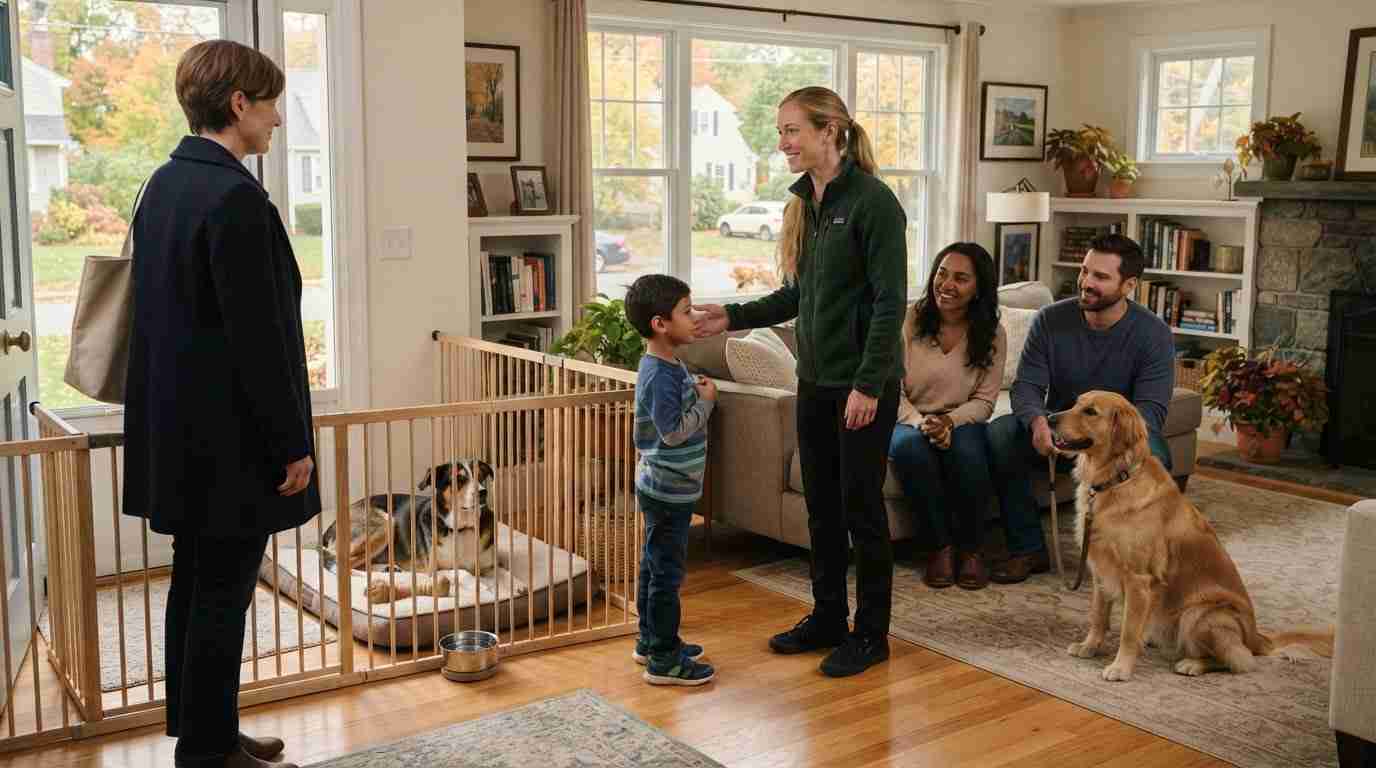
If you’re looking for guidance on how to have visitors over with a reactive dog Worcester, start by making safety, not a greeting, the priority. Barking, lunging, or hiding can be signs that your dog feels overwhelmed, not that they’re being difficult.
It’s understandable to worry about what might happen when the doorbell rings or where your dog should go while guests are there. A clear plan can make visits more predictable and manageable. This guide covers what to do before, during, and after guests arrive, and how gradual exposure can help without pushing your dog past their comfort level. Cristina Galanek of I Wuff You Dog Training is a Certified Behavior Consultant Canine (CBCC-KA) and Certified Professional Dog Trainer (CPDT-KA), offering behavior-focused support for fear, anxiety, and reactivity in Worcester and nearby communities, including Shrewsbury, Holden, West Boylston, Boylston, Rutland, and Paxton.
Key Takeaways
- Barking, lunging, or hiding may reflect fear, anxiety, or stress. Plan around your dog’s comfort rather than expecting a greeting.
- Prepare a comfortable separate space and ask guests not to approach, stare at, call, or touch your dog.
- A predictable arrival routine and clear boundaries can make visits easier to manage.
- If reactions are escalating or fear is intense, seek individualized support and gradual exposure without forcing interaction.
Why visitors can feel overwhelming for a reactive dog in Worcester
If the doorbell makes you tense because you’re anticipating your dog’s reaction, that worry is understandable. Guest-related reactivity can include barking, hiding, freezing, or lunging. Fear, anxiety, or stress may contribute, but a behavior alone can’t tell you exactly what your dog is feeling. A successful visit doesn’t depend on a greeting. Your dog’s emotional safety matters more than appearing sociable.
What might trigger barking, hiding, or lunging when guests arrive?
A visitor can change several things in your dog’s familiar environment at once: a sudden door sound, unfamiliar voices and scents, movement through the home, or less access to space. Fear may prompt a dog to seek distance; anxiety can build as they anticipate what might happen next. When stress rises, a dog may have a harder time settling or responding as they usually do. These reactions are information, not proof of a particular diagnosis or a “bad” dog.
Look at the whole situation rather than relying on one signal. A dog who barks may be trying to make a person move away, while a dog who hides may be seeking relief. The broader discussion of Dog Aggression covers different behavior contexts, but each dog needs to be understood individually. Learning about reactive dog training can help you recognize patterns and consider what may be contributing to your dog’s distress.
There’s no single recipe for how to have visitors over with a reactive dog Worcester. A psychologically informed approach starts by identifying what feels difficult to your dog, then making room for safety and settling instead of suppressing warning signals. Noticing the emotion behind a response can help you make more compassionate choices.
How to plan a calmer visit with a reactive dog
Preparation can make a guest visit more predictable for you and your dog. Treat the plan as a way to reduce pressure, not a test of whether your dog can cope. These steps are a practical starting point for Worcester households:
- Set up a comfortable retreat. Choose a quiet room or a space behind a secure barrier, with familiar bedding and an activity your dog enjoys. Help your dog settle there before guests arrive, and keep the space available throughout the visit.
- Share clear boundaries with guests. Explain that your dog needs space. Ask visitors not to approach, stare at, call, or touch them, even if your dog comes closer. Your dog doesn’t need to greet anyone.
- Make arrivals calm and manageable. If possible, have guests enter quietly while your dog is already settled away from the entrance. Keep an easy exit route available. If your dog shows distress, increase distance and guide them back to their quiet space rather than encouraging interaction.
What should guests do when they enter your home?
Ask guests to follow your lead, move calmly, and let your dog observe from a distance if they choose. Your dog can remain behind a barrier or in a quiet room for the entire visit; that’s a thoughtful safety choice, not a failure. The American Animal Hospital Association’s Understanding Reactive Dogs resource offers broader context for why responses vary. When gradual, dog-led exposure is appropriate, Behavior Adjustment Training (BAT) can help shape a plan that respects your dog’s pace.
If visitor reactions are difficult to manage at home, private in-home training can help you build a practical plan for your dog and household. Explore support from I Wuff You Dog Training for personalized guidance.
When Worcester dog parents should seek help with visitor reactivity
Professional support can help when your dog’s reactions are escalating, fear seems intense, or you’re no longer confident managing the situation safely. Consider guidance if your dog has a history of trauma or seems distressed by people even at a distance. An individualized assessment can help identify patterns and shape a plan around your dog’s emotional needs, rather than focusing only on stopping visible behavior.
For fearful dogs, exposure therapy involves introducing a trigger gradually and in a controlled way, at a level the dog can manage. It isn’t flooding, forced proximity, or expecting a dog to endure a greeting. With a trauma history, the setup and pace need particular care, with attention to signs of stress and opportunities to move away. A qualified professional can tailor the process to the dog’s responses rather than a fixed timetable.
How can behavior training support visits without forcing interaction?
Positive reinforcement, cognitive training, and BAT-informed guidance can help build coping skills while respecting a dog’s choices. Cristina Galanek holds CBCC-KA and CPDT-KA credentials and uses behavior-focused approaches to support dogs experiencing fear, anxiety, and reactivity. With professional guidance and practical management, reactivity doesn’t have to mean giving up public outings; you can work toward outings suited to your dog’s current comfort and needs. Reactive dog training can address behavior concerns at home and beyond.
If visitor reactions are difficult to manage, I Wuff You Dog Training offers private in-home support to create a plan for your dog and household.
Take the Next Step Toward Easier Visits
Your next visit doesn’t need to be a test your dog has to pass. Notice what helps your dog feel more secure, then adjust your plan at a pace that respects their comfort. Small, thoughtful changes can give you more confidence, even if your dog isn’t ready to share the room with guests.
If you’re still figuring out how to have visitors over with a reactive dog Worcester, you don’t have to work it out alone. Cristina Galanek’s behavior-focused training can help you choose a compassionate next step for your dog and household. Explore reactive dog training and arrange private in-home support with I Wuff You Dog Training. With patient, informed guidance, you and your dog can move forward together.
Frequently Asked Questions
Should my reactive dog meet guests when they visit?
Not necessarily. Base the decision on your dog’s behavior around that particular person, not on a social expectation. A dog who has relaxed around a familiar guest may be more comfortable than one who hasn’t. Keep any interaction supervised, and end it if your dog becomes tense, stops engaging, or tries to move away.
How do I introduce visitors to a fearful dog at home?
Start by making the arrival sound less surprising before arranging an in-person introduction. If door knocks or the bell are triggers, you might practise with a recording at a low volume and pair the sound with something your dog enjoys, increasing the volume only if they remain comfortable. For intense fear or a trauma history, get individualized guidance before trying this practice.
Can a reactive dog learn to stay calm around visitors?
Some dogs can build more comfortable responses, though progress varies and can’t be promised. Look beyond silence: your dog might sniff, take a treat, respond to a familiar cue, or disengage from a sound more easily. Tracking these changes after visits can help you spot patterns and adjust future plans to your dog’s needs.
When should I get professional help for my dog’s reactions to guests?
Consider support if reactions start before anyone arrives, such as your dog becoming distressed at ordinary sounds near the entrance, or if the response begins appearing around people outside the home too. It may also help if you’re cancelling plans or changing household routines to avoid reactions. A qualified professional can assess these patterns and help plan next steps.