
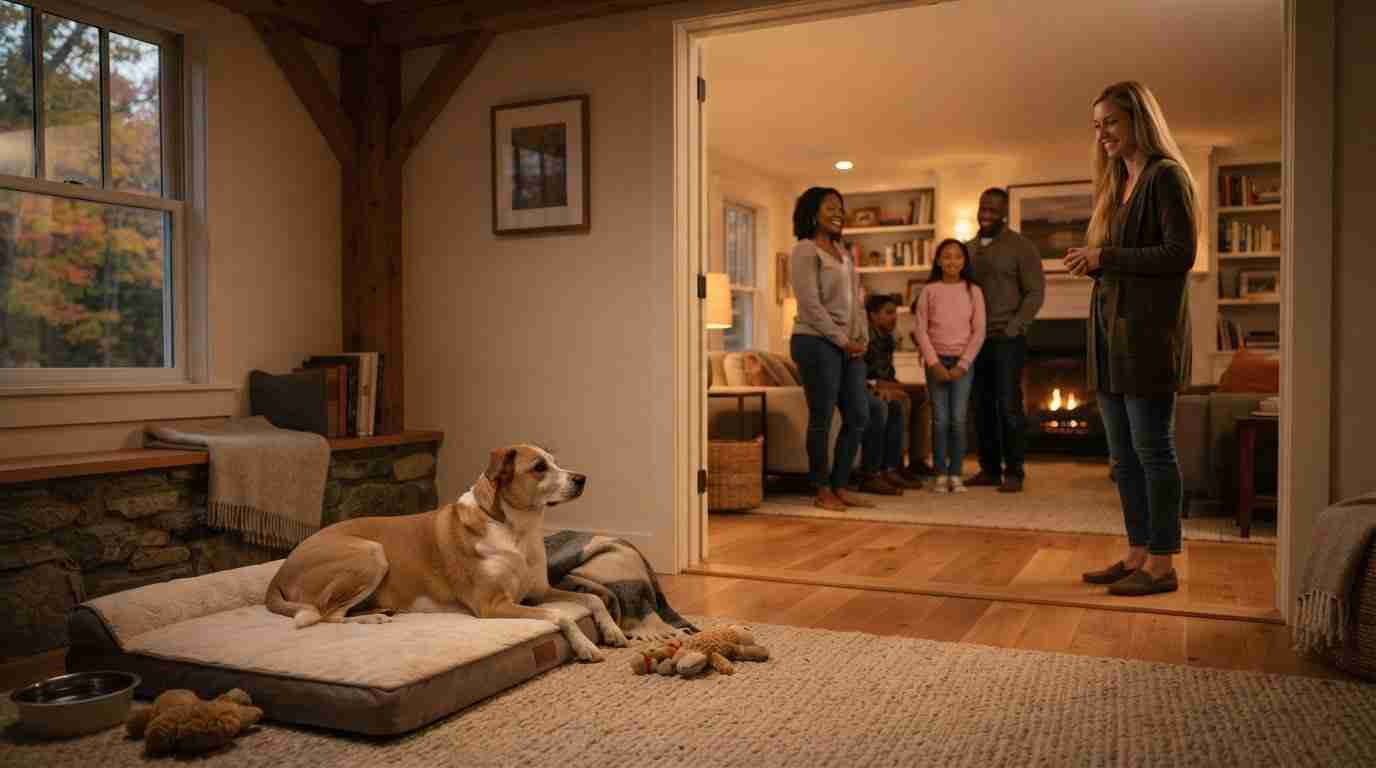
What if a successful party didn’t mean your dog had to mingle? If you’re asking, “can I ever host a party with my anxious dog,” it’s understandable to worry about barking, hiding, or your furry family member feeling overwhelmed. Hosting may be possible, but your dog’s comfort, not guest access, needs to shape the plan.
You don’t have to choose between welcoming people and caring for your dog. This guide will help you think through whether your dog should be nearby or resting in a quiet retreat, how to reduce stress during a gathering, and when extra support could help.
Cristina Galanek is a Certified Behavior Consultant Canine (CBCC-KA) and Certified Professional Dog Trainer (CPDT-KA), and the only CBCC-KA certified trainer in the Worcester area. With science-based, force-free positive reinforcement, private training, Behavior Adjustment Training, and gradual exposure, she supports dogs experiencing fear, anxiety, and reactivity. Let’s explore a thoughtful approach that respects your dog’s emotions and builds confidence at their pace.
Key Takeaways
- “Can I ever host a party with my anxious dog?” Hosting may be possible, but your dog doesn’t have to join the gathering.
- Consider which parts of a party may feel difficult for your dog, including unfamiliar visitors, noise, and changes to routine.
- Prepare a familiar, accessible quiet retreat, let guests know to give your dog space, and watch for signs they need a break.
- If fear or reactivity keeps affecting everyday life, individualized professional guidance can help you plan supportive next steps.
Can You Host a Party With an Anxious Dog? Start With Their Comfort
Yes, hosting may be possible, but your dog doesn’t have to attend the party. If you’re wondering, “can I ever host a party with my anxious dog,” consider how the gathering might feel from your dog’s perspective. Noise, unfamiliar visitors, and changes to familiar routines can make home feel unpredictable. If your dog can’t move away from the activity, they may also feel they’ve lost control over how close people come.
Fear and anxiety are emotional responses to something a dog perceives as unsafe or uncertain. A dog who feels threatened may stay alert and struggle to settle, even when guests mean no harm. Hiding or withdrawing can be an attempt to find safety; pacing may reflect difficulty calming down, while barking can be a way to create distance. These behaviors aren’t automatically disobedience. Noticing what happens before and after them can help you understand what your dog may be experiencing. A broad overview of dog behavior offers context for behavior concerns, while reactive dog training can address responses that need individualized support.
What does a comfortable hosting plan look like for a worried dog?
Success doesn’t have to mean your dog mingles. It can mean they have a safe place to rest, with the freedom to stay away from guests. Your dog’s comfort should guide the hosting plan. Preparation can support a gathering, but persistent fear or reactivity may need a thoughtful behavior plan that helps your dog feel safer over time.
How to Prepare for Guests Without Pressuring Your Anxious Dog
Plan around what your dog can handle, not what you hope they’ll tolerate. The same thoughtful approach can support outings, too: reactivity doesn’t automatically mean your dog must avoid public places, but it does call for choices that protect their comfort and safety.
- Assess likely triggers. Notice what tends to raise your dog’s stress, such as doorbells, approaching strangers, or crowded spaces. For outings, consider quieter settings where you can keep a comfortable distance and leave if needed.
- Prepare a retreat. At home, make a familiar resting place accessible before guests arrive. Away from home, identify ways to create distance or end the outing calmly. Neither should be used to punish or force interaction.
- Set expectations. Ask party guests not to approach or call your dog over. In public, you can calmly let people know your dog needs space.
- Monitor and adjust. If your dog’s distress rises, increase distance or pause the activity. Don’t wait for them to “get used to it.”
How can gradual exposure support a fearful dog?
Exposure therapy means introducing a trigger at a manageable level, not overwhelming your dog with it. A professional can help shape gradual practice for real-life situations, including public outings, and adjust the plan to your dog’s responses. With positive reinforcement, these experiences can be more manageable. Cristina’s Behavior Adjustment Training supports giving dogs space and opportunities to make choices.
Private guidance can help you plan outings that build skills without asking your dog to cope with more than they’re ready for. Explore private dog training for individualized support with reactivity and anxiety.
When Professional Help Can Make Hosting Feel More Manageable
If fear, anxiety, or reactivity repeatedly disrupts everyday situations, professional guidance can help you understand what your dog is communicating and plan supportive next steps. That might mean a dog struggles when visitors arrive, can’t settle around unfamiliar people, or reacts strongly to sounds and activity. You don’t have to wait for a party to become a crisis before seeking help.
Cristina is a Certified Behavior Consultant Canine-Knowledge Assessed (CBCC-KA) and Certified Professional Dog Trainer-Knowledge Assessed (CPDT-KA). She’s also a member of the Grisha Stewart Academy and a Behavior Adjustment Training (BAT) Advocate. Her private, personalized training in Worcester, MA and surrounding towns considers each dog’s emotions and real-life environment.
What can individualized dog training address?
Training can address fear, anxiety, and reactivity while building practical skills for everyday situations, from settling at home to coping with unfamiliar people at a distance. The goal isn’t to make a dog tolerate every gathering; it’s to understand their needs and work at a pace they can manage. Cristina uses science-based, force-free, positive-reinforcement methods. Learn more about science-based dog training methods.
Private support can help you distinguish a short-term hosting plan from gradual behavior work. If you’re asking yourself, can I ever host a party with my anxious dog, an individualized plan can help you make informed choices without pressuring your dog to interact. Explore Cristina’s dog training support for guidance tailored to your dog’s needs.
Let Your Dog’s Comfort Shape What Comes Next
You don’t have to decide today whether your dog will ever feel comfortable around a party. A more helpful next step is to notice what helps them feel secure in everyday situations, then build from there without making guest greetings the goal. If you’re still asking, “can I ever host a party with my anxious dog,” remember that hosting can be planned around your dog’s needs, including time and space away from the gathering.
Fear and reactivity deserve understanding, not pressure. With compassionate, science-based support, you can work toward real-life situations feeling more manageable while respecting your dog’s pace. Explore private dog training for fearful and reactive dogs to consider a plan tailored to your companion. Small, thoughtful steps count, and you and your dog can take them together.
Frequently Asked Questions
Can I host a party if my dog is anxious?
Yes, it may be possible. If you’re wondering, can I ever host a party with my anxious dog, remember that hosting doesn’t require your dog to be part of the event. You might arrange for them to spend the gathering with a trusted person in a familiar setting, or plan a shorter visit with fewer people. Choose what best supports your dog’s comfort.
Should I let guests give my anxious dog treats?
Only if your dog seems comfortable and freely chooses to approach. Ask guests to toss a treat gently to the side or behind your dog, rather than holding it out to draw them closer. That lets your dog enjoy the treat without feeling they must come within reach. If they turn away, pause, or leave, respect that choice and ask guests not to follow.
What should I do if my dog growls when guests arrive?
Stay calm and create more distance between your dog and the guests. A growl is useful information that your dog may need space, so don’t scold them or encourage guests to approach. Guide guests away and give your dog a clear route to a quieter area. If growling happens repeatedly, individualized behavior support can help you understand what may be driving the response.
Can an anxious dog learn to feel calmer around visitors?
Some dogs can develop more comfortable responses through gradual, individualized behavior work, though progress varies and there’s no fixed timeline. You may notice small changes, such as your dog recovering more readily after a visitor arrives or choosing to observe from farther away. Dog parents in Worcester, Shrewsbury, Holden, West Boylston, Boylston, Rutland, and Paxton can explore private training tailored to real-life needs.