
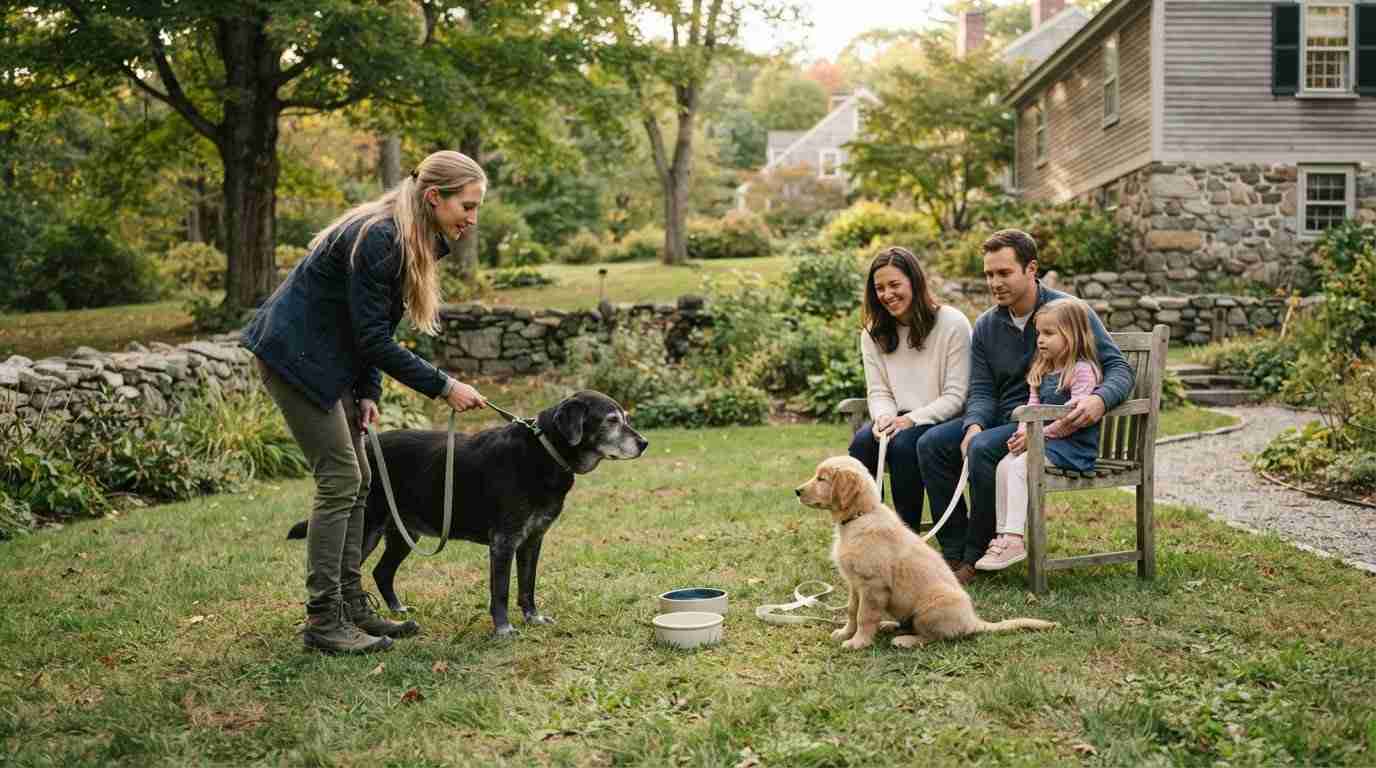
What if the best first meeting is one where your dogs don’t interact much at all? It’s natural to worry that your older dog may feel stressed or displaced, especially if the puppy’s arrival brings barking, avoidance, or tension. A calm introduction doesn’t need to happen all at once. When introducing a new puppy to an older dog, Worcester families can let each dog’s comfort guide the pace.
This guide explains how to build positive familiarity, notice when either dog needs space, and decide when individualized support may help. Cristina of I Wuff You Dog Training is the only CBCC-KA certified trainer in the Worcester area. She is also a Certified Professional Dog Trainer (CPDT-KA), a Grisha Stewart Academy member, and a Behavior Adjustment Training (BAT) Advocate. Her science-based, force-free private training uses positive reinforcement to support dogs experiencing fear, anxiety, or reactivity, helping you make thoughtful introductions with both dogs’ emotional wellbeing in mind.
Key Takeaways
- When introducing a new puppy to an older dog, Worcester families can take a gradual approach, making calm familiarity the first goal instead of instant friendship.
- Set up separate spaces and build brief, supported exposure. Let both dogs pause or move away when they need space.
- Ongoing fear, anxiety, or reactivity may mean the dogs need a more individualized introduction plan.
- Science-based, positive support can help protect each dog’s comfort as they adjust to sharing a home.
Introducing a New Puppy to an Older Dog in Worcester: Start with Comfort, Not Contact
A puppy brings new sounds, smells, activity, and demands on your attention. Your older dog may need time to adjust, even if they’ve enjoyed the company of other dogs before. Don’t expect instant friendship or encourage close contact right away. When introducing a new puppy to an older dog, Worcester routines and home life may be changing, so start by helping both dogs feel secure in the new arrangement.
A gradual introduction is a series of manageable experiences that lets each dog become familiar with the other while staying comfortable and free to take space. Calm familiarity is meaningful progress: your older dog might notice the puppy from a distance, then relax or choose to disengage. Learning about understanding dog behavior can help you consider what each dog’s responses may be communicating, instead of treating every reaction as an invitation to interact.
What should you consider before the first meeting?
Plan around the dogs you have, not an imagined “perfect” greeting. An older dog who enjoys quiet may find a bouncy puppy tiring. A puppy with little experience around adult dogs may need extra room to settle. Consider each dog’s age, temperament, past social experiences, and comfort with sharing space. Choose a calm setting where either dog can move away.
- Protect familiar routines. Keep your older dog’s usual rest, walks, and feeding patterns as consistent as you can.
- Make room for choice. Don’t corner either dog or require them to approach. Stepping away is useful information, not a failure.
- Keep one-to-one time. Give your older dog attention without the puppy present, so familiar connection remains part of the day.
Watch for signs that either dog needs more space, such as turning away, retreating, stiffening, or barking. Pause and create more room instead of pushing the meeting forward. Respecting those signals helps lay a safer, more positive foundation for future interactions.
How to Introduce a Puppy to an Older Dog Gradually
A steady progression gives both dogs time to process a new experience without being pushed into close contact. A calm plan for introducing a new puppy to an older dog in Worcester starts with space, followed by short, supported exposure. Allow more familiarity only when both dogs are comfortable. Supervise them, and end an interaction while they’re still coping well.
- Set up separate spaces. Give each dog a comfortable area where they can rest, eat, and relax without being approached by the other. A barrier or closed door lets them become familiar with each other’s sounds and scent while staying apart.
- Try brief supported exposure. When both dogs seem settled, let them see each other from a distance, with a secure barrier between them if needed. Keep the moment manageable, and use calm praise or treats to build a positive association. Don’t lure either dog closer than they choose to come.
- Build familiarity at their pace. Gradually allow more shared time only when both dogs remain comfortable. Keep interactions supervised and provide breaks, especially if the puppy gets overexcited or the older dog seeks space.
Progress depends on each dog’s responses, not a fixed deadline. A slower pace is useful information, not a setback.
How can you tell whether both dogs are comfortable?
Look at the whole interaction, not one signal in isolation. Relaxed movement, sniffing, and choosing to approach can suggest a dog is comfortable in that moment. Turning away or moving off may mean they want a break. A sudden stiff posture or repeated barking is a cue to pause and create more space. No single sign tells the whole story, so notice patterns and context.
For individualized guidance, science-based dog training methods can help you adjust introductions to what each dog is communicating.
When a Worcester Puppy Introduction Needs Personalized Dog Training
If fear, anxiety, or reactivity keeps disrupting your dogs’ interactions, personalized guidance can help you understand what each dog is experiencing. A puppy’s approach may overwhelm an older dog who needs space, while a puppy may be unsure how to respond to unfamiliar signals. The goal isn’t to make either dog tolerate distress. It’s to identify triggers and support safer, calmer responses.
Carefully planned exposure therapy can help fearful dogs, including dogs affected by trauma, become more comfortable with a trigger gradually, at a level they can manage. A force-free plan uses positive reinforcement and considers the dog’s emotional state instead of pushing through fear. Reactivity doesn’t have to keep you from taking your dog out in public. With professional support, you can work on managing triggers and helping your dog feel more at ease in real-life situations. Cristina is a Certified Behavior Consultant Canine-Knowledge Assessed (CBCC-KA), a Certified Professional Dog Trainer-Knowledge Assessed (CPDT-KA), and a Grisha Stewart Academy member and Behavior Adjustment Training (BAT) Advocate. She is the only CBCC-KA certified trainer in the Worcester area. Her BAT approach supports thoughtful, choice-based behavior work, while this reactive dog training guide offers further context on managing reactivity.
What can private, science-based support help you work on?
Private training can shape a plan around each dog’s emotional needs and your home’s daily realities, such as narrow hallways, shared resting areas, or times when the puppy gets overexcited. With science-based, force-free methods and positive reinforcement, you can work toward calmer choices without forcing closeness. I Wuff You Dog Training provides private dog training in Worcester and surrounding towns. Explore private dog training in Worcester and surrounding towns for support tailored to your dogs and home.
Let Their Relationship Grow at Its Own Pace
A peaceful shared home is built from small moments of safety, not one perfect greeting. Notice what each dog chooses: resting nearby, exploring a shared space, or calmly disengaging. Those everyday choices can help you decide whether to maintain the current pace or take a small next step. If barking, avoidance, or worry continues, individualized support can help you respond to what each dog is communicating. Fear or reactivity doesn’t have to define their future together.
A patient approach to introducing a new puppy to an older dog starts with each dog’s comfort. When you’re ready for guidance tailored to your dogs and home, explore private dog training in Worcester and surrounding towns. I Wuff You Dog Training serves Worcester, Shrewsbury, Holden, West Boylston, Boylston, Rutland, and Paxton. Keep moving gently. Your patience is helping both dogs find their paws in this new chapter!
Frequently Asked Questions
How do you introduce a new puppy to an older dog for the first time?
Start with a low-distraction first meeting where neither dog is trapped or crowded. If possible, choose a quiet, neutral outdoor spot and have one adult guide each dog. Keep enough distance for both to observe without rushing together. End the meeting while both can still respond to you and take treats. Then return home separately rather than testing them indoors.
How long does it take for an older dog to accept a new puppy?
There isn’t a reliable calendar date for acceptance. It depends on each dog’s temperament, experience, and comfort with change. Rather than waiting for playfulness, look for ordinary peaceful moments: your older dog can rest while the puppy is nearby, and both can move through familiar routines without repeated distress. Keep meals and sleep separate until shared spaces feel manageable.
Should I let my older dog correct the puppy?
Don’t rely on your older dog to teach the puppy manners. If the puppy pesters them, calmly guide the puppy away and give your older dog a protected break. A growl communicates that the dog needs space, so don’t punish it or force the dogs to stay together. If tension continues or contact occurs, prevent another interaction and seek tailored guidance.
When should I get professional help introducing a puppy to an older dog?
Consider individualized help if fear or reactivity keeps returning, either dog can’t settle around the other, or you feel you must constantly intervene. A behavior professional can assess triggers and household routines, then help shape a safer plan for both dogs. I Wuff You Dog Training provides private dog training in Worcester, Shrewsbury, Holden, West Boylston, Boylston, Rutland, and Paxton.