
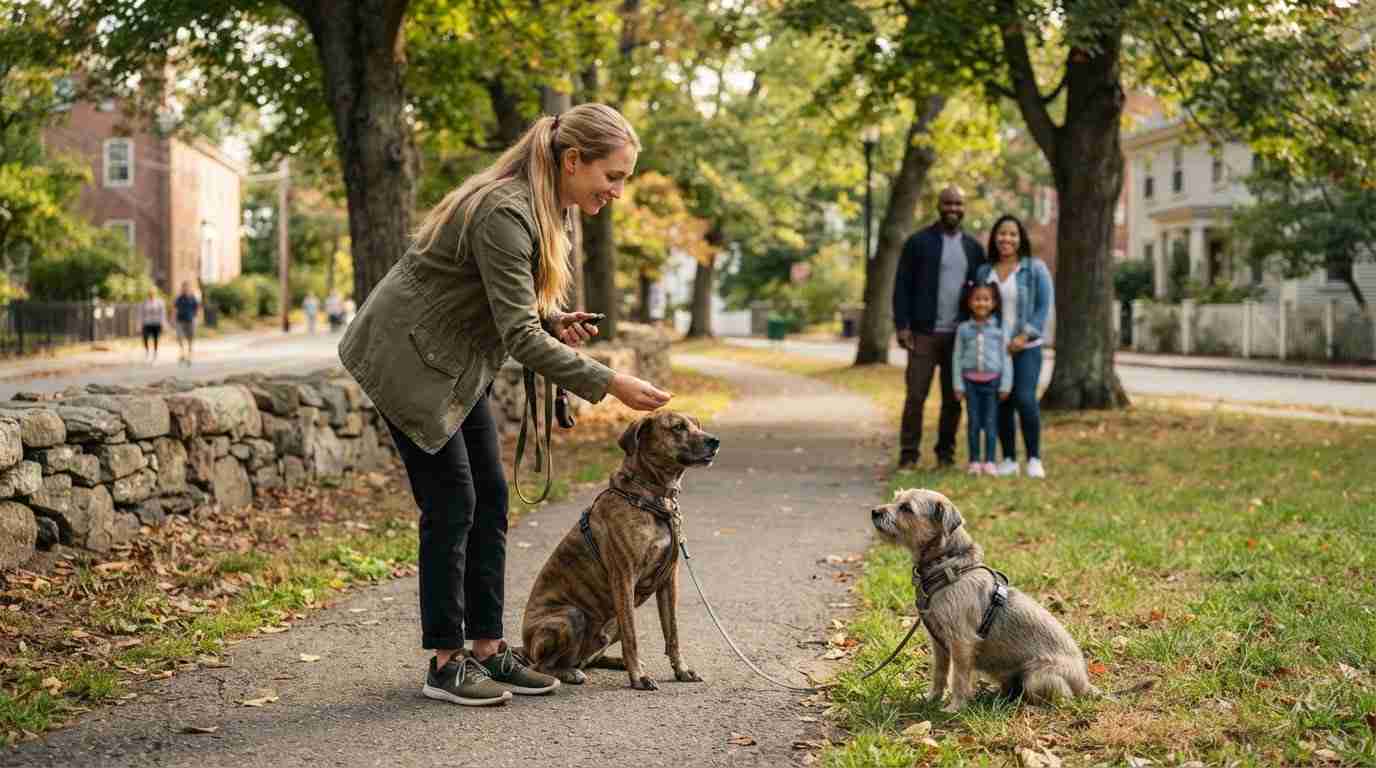
Your dog’s age, size, or breed doesn’t define their ability to learn. Aggressive dog training in Worcester, MA can support dogs of all breeds, sizes, and ages, from puppies to senior dogs, with private sessions tailored to their needs.
Barking, lunging, guarding, or snapping can leave you worried about what might happen next. It’s understandable to feel anxious, but these behaviors are best addressed by considering the fear, stress, or other emotions behind them, rather than simply suppressing what your dog is communicating.
Learn how private training can address anxiety and aggression, how positive reinforcement, Behavior Adjustment Training (BAT), and gradual exposure can support calmer responses, and how training can be adapted to your dog’s age. Professional guidance can also help you plan safer, more comfortable experiences in everyday settings.
Key Takeaways
- Look beneath barking, lunging, or guarding to understand the fear, anxiety, or other emotions driving your dog’s behavior.
- In-home training lets you work on behavior in familiar surroundings and build skills for everyday situations.
- Dogs of different breeds, sizes, and ages can learn; the right approach depends on your dog’s needs and experiences.
- Explore how positive reinforcement, Behavior Adjustment Training, and thoughtfully paced exposure can support calmer responses, with guidance from a CBCC-KA and CPDT-KA certified trainer.
Anxiety- and aggression-related behavior training
A behavior plan should address both what your dog does and what they may feel. Fear can make a person, another dog, or a familiar situation seem threatening, prompting barking, lunging, or avoidance.
Aggression and Reactivity Modification
Behavior modification looks beyond the visible reaction to the emotion and context behind it. A dog who growls when approached may be asking for distance; forcing contact can increase distress. A professional can identify triggers and use positive reinforcement with gradual exposure to help your dog manage situations and practice calmer responses. Progress means building comfort, not silencing warning signals.
Owner Education and Consultations
A behavior consultation connects your dog’s history, body language, and daily environment to a practical plan. A dog trainer teaches skills; a certified behavior consultant assesses complex behavior and develops modification plans; a veterinary behaviorist is a veterinarian specializing in behavior. Look for CBCC-KA and CPDT-KA credentials and direct experience with fear and aggression. In Worcester, the trainer holds the area’s only CBCC-KA certification. Ask how they’ll recognize stress and adapt sessions if your dog becomes overwhelmed.
Immediate Safety Measures
Until you have a plan, prevent close encounters. Use secure barriers at home, keep your dog leashed outdoors, and create distance when people or dogs approach. Avoid greetings your dog can’t comfortably manage. If your dog growls, calmly create more space rather than punishing the warning; the underlying fear still needs attention.
Behavior Modification Progress
Progress varies with your dog’s history, triggers, stress, and ability to practice comfortably. Track specific changes, such as choosing to move away or settling sooner after a trigger appears. Exposure should be gradual and manageable; overwhelming experiences can increase distress instead of supporting new learning.
In-home dog training
Private training at home lets you address behavior where familiar routines and triggers occur. A doorbell, hallway, food bowl, or window can reveal what makes your dog anxious or reactive. The trainer can observe those moments and help you practice safer responses in the same setting. Sessions can also focus on household routines, such as calmly moving your dog away from a visitor.
Training doesn’t determine a dog’s legal status after a bite or dangerous-dog designation. Keep any official notice and follow its directions; behavior work doesn’t replace that process. For training, write down what happened before an incident, where it occurred, and what helped your dog settle. Those details give a behavior consultation useful context.
Choose a professional with credentials relevant to behavior and practical experience supporting fear and aggression. CBCC-KA means Certified Behavior Consultant Canine-Knowledge Assessed; CPDT-KA means Certified Professional Dog Trainer-Knowledge Assessed. Ask how the trainer assesses triggers, explains the plan, and guides your practice. Cristina is also a member of the Grisha Stewart Academy and a Behavior Adjustment Training advocate, relevant experience when discussing BAT-based support.
In Worcester, a home session can focus on everyday challenges before practicing skills in other settings. For example, you might work on a calm routine when guests arrive, then plan how to create distance from dogs outdoors. Ask how the session will address your dog’s emotional state, not only visible behavior. Guidance for reactive behavior can help you build a practical next step for outings.
Training for dogs of all breeds, sizes, and ages
A dog’s breed, size, or age doesn’t tell the whole story. A puppy who barks at visitors and a senior dog who guards a resting spot need different plans shaped around their triggers, history, and daily routines. Training can support dogs at every life stage, with goals tailored to each individual.
For a puppy, early work can focus on gentle social experiences, recovery after surprises, and comfort with everyday handling. An adult dog may need support around specific triggers, such as unfamiliar dogs or people entering the home. For a senior, consider familiar routines, mobility, and whether the behavior has changed. These details help establish a realistic starting point.
Size matters for practical planning, not for deciding whether a dog can learn. A small dog who growls when picked up may need choice-based handling practice; a large dog who pulls toward a trigger may need more space to stay comfortable. In either case, notice what happens before the reaction and what helps your dog settle. That information makes training more relevant than assumptions about breed.
Age alone doesn’t determine the youngest or oldest dog who can benefit. The useful question is what your dog can comfortably practice now, then how to build gradually. Keep sessions focused, reward calm choices, and adapt the environment to your dog’s needs. If you’re ready to discuss an individualized approach, talk with a dog trainer.
I Wuff You Dog Training: Reactive Dog Training
I Wuff You Dog Training offers Reactive Dog Training for families managing fear-driven reactions, barking, or lunging. With gradual, manageable practice, professional guidance can help you plan for more comfortable walks and everyday activities.
Private In-Home Training addresses behavior in familiar surroundings, while Behavior Adjustment Training (BAT) supports safer choices around triggers. For fearful dogs, including those affected by trauma, exposure therapy can introduce challenging sights and situations gradually, helping them build comfort without overwhelming them. Puppy Behavior Training can also support young dogs as they learn about the world.
Explore Reactive Dog Training with I Wuff You Dog Training, and contact the team to discuss a thoughtful next step for your dog.
Choose a Practical First Step
Progress can start with one achievable goal: helping your dog feel calmer when a familiar trigger appears. Before reaching out, note what your dog reacts to, what the situation looks like, and what helps them recover. These observations can make the first conversation more focused and help shape a useful training plan.
If you’re considering aggressive dog training in Worcester, MA, I Wuff You Dog Training offers Reactive Dog Training and Private In-Home Training for behavior challenges in everyday settings. Puppy Behavior Training can help young dogs build helpful skills, too. The next step is simply to share what’s been difficult and what you hope will change. Contact I Wuff You Dog Training to discuss a path forward for your dog. With understanding, thoughtful practice, and support, you and your furry companion can take the next step together.
Frequently Asked Questions
What is the youngest and oldest dog you will work with?
I Wuff You Dog Training works with dogs across life stages, from puppies to senior dogs. Age alone doesn’t define a dog’s ability to participate; the training approach can reflect their needs and comfort. A young puppy, for example, may need short, simple learning activities, while an older dog may benefit from practice suited to familiar routines.
Will you train all breeds and ages of dogs?
Yes, training is available for dogs of all breeds and ages. Breed, size, and age can inform the approach, but they don’t define your dog’s individual behavior or learning needs. A rescued adolescent adjusting to a new household, for example, may need different support from a puppy learning to settle around family activity.
What dog trainers in Worcester, MA specialize in aggression and reactivity?
I Wuff You Dog Training provides support for aggression and reactivity in Worcester and nearby communities, including Shrewsbury, Holden, West Boylston, Boylston, Rutland, and Paxton. Its Reactive Dog Training can help families address behavior that disrupts walks, home routines, or public outings. For aggressive dog training in Worcester, MA, contact I Wuff You Dog Training and describe the situations that concern you and what you’d like your dog to handle more comfortably.
Which Worcester-area dog aggression trainers use reward-based, force-free methods?
I Wuff You Dog Training uses science-based, force-free methods centered on positive reinforcement. A trainer can, for example, reward a dog for turning away from a trigger or choosing to settle, building useful alternatives without punishment. This approach teaches skills and supports emotional wellbeing rather than relying on fear or discomfort to stop a visible reaction.