
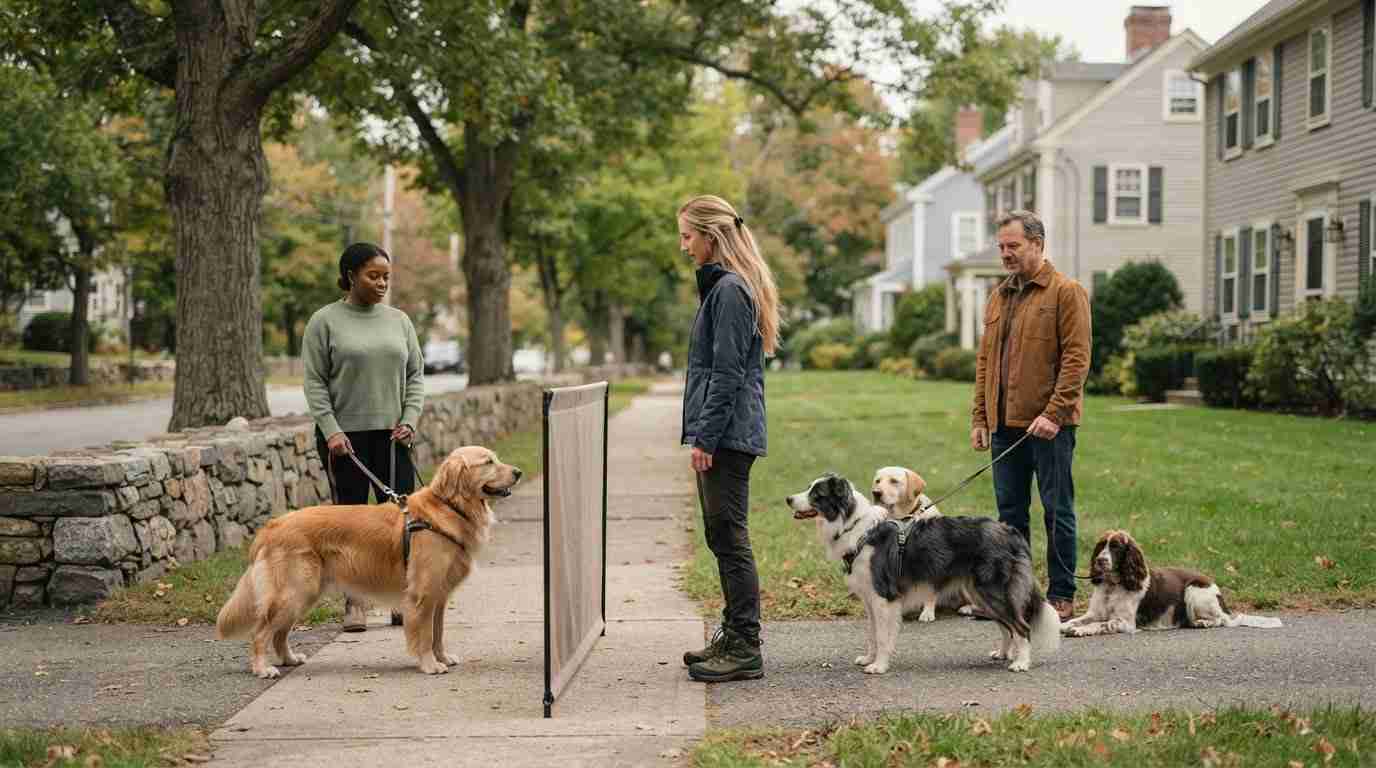
Your safest move in a dog fight may be to keep your hands away. The urge to grab collars or get between the dogs is understandable, but it can put you at risk of being bitten. Knowing how to safely break up a dog fight starts with protecting yourself and using distance or a barrier only when you can do so safely.
If you’re frightened about injuries or another fight, you’re not alone. This guide explains when not to intervene, safer ways to separate dogs, and what to do afterward, including when to seek veterinary and behavior support.
For future safety, understanding the fear, anxiety, or reactivity behind an incident can help you plan calmer encounters. Cristina is a Certified Behavior Consultant Canine-Knowledge Assessed (CBCC-KA) and Certified Professional Dog Trainer-Knowledge Assessed (CPDT-KA), a Grisha Stewart Academy member and Behavior Adjustment Training advocate, and the only CBCC-KA certified trainer in the Worcester area. Her science-based, force-free, positive-reinforcement guidance can help you make a thoughtful plan for your dog.
Key Takeaways
- Learn how to safely break up a dog fight by assessing the danger first and choosing a safer response only when it’s possible to act without approaching the dogs.
- After separation, keep the dogs in secure, separate spaces to prevent an immediate reunion.
- Look for signs of injury from a safe distance, and avoid handling areas that appear painful or injured.
- A single fight doesn’t reveal its cause. Individualized, positive-reinforcement behavior support can help you understand fear, anxiety, or reactivity and plan safer future encounters.
How to safely break up a dog fight: assess danger before acting
Protect people first. A dog may bite during an intervention, even if you know them well. Reaching for a collar or pulling a dog away puts your hands and face within biting range, so don’t try to physically separate the dogs.
Never place your hands between fighting dogs. Keep your arms and body out of the space between them, too. If you can’t create separation without approaching, step back and get help rather than taking a risk.
- Assess from a safe distance. Notice whether people or other animals are nearby, and identify a clear route away. Don’t move closer to inspect the dogs if doing so could expose you to a bite.
- Use distance or a barrier only if it’s safe. If a sturdy object, such as a chair, board, or bin, is within easy reach, you may be able to place it between the dogs without entering their path. Don’t grab collars or force the dogs apart.
- Seek help when needed. If the dogs remain engaged, you’re alone, or you can’t safely separate them, move to safety and call for appropriate emergency assistance. Protecting yourself is the priority.
When should you avoid intervening directly?
Stay back if the dogs are close to you, the fight is escalating, or you can’t place a barrier without approaching. A single incident doesn’t explain its cause. Fear, stress, or other factors may be involved. Background on dog aggression can help put behavior in context, but it can’t assess the dogs involved. After the immediate danger has passed, private dog training in Worcester provides local dog parents with individualized support in Worcester and surrounding towns.
What to do after the dogs are separated
Once the dogs are apart, focus on keeping the situation calm and preventing another encounter. The steps after a fight matter too: separation is the beginning of aftercare, not proof that either dog is uninjured or ready to meet again.
- Move them to separate, secure spaces. Use separate rooms or other secure areas where they can’t reach each other. Keep the transition calm, and don’t bring them together to “see how they do.”
- Observe without crowding them. From a safe distance, look for changes in movement or signs that a dog may be hurt. Don’t press, probe, or handle an area that appears painful.
- Arrange veterinary assessment if injury is possible. Contact a veterinarian promptly if you suspect either dog may be injured. A calm appearance doesn’t rule out an injury, so have a professional assess any concerns rather than relying on a visual check alone.
How can you keep the dogs safely apart afterward?
Use doors, secure barriers, or separate enclosed spaces, and give each dog room to settle without seeing or reaching the other. Ask another adult for help only if they can do so safely. Keep the dogs apart while you arrange any needed veterinary care and consider next steps.
Physical separation prevents contact; it doesn’t establish that either dog is medically well or safe to reunite. Even if both dogs seem relaxed, don’t assume they’re ready for another interaction. A fight’s cause can’t be determined from the incident alone. A thoughtful behavior assessment can help identify whether fear, anxiety, or other factors may be involved. The ASPCA Guide to Dog Aggression offers further background on understanding behavior.
For help planning safer future encounters, individualized reactive dog training can support you and your dog with compassionate, science-based, positive-reinforcement guidance.
Prevent another dog fight with compassionate behavior support
A fight is frightening, but one incident alone doesn’t establish its cause. Fear, anxiety, reactivity, pain, and the situation itself may all matter, so an individual assessment is needed to understand what your dog is experiencing. A compassionate behavior plan looks beyond the visible reaction to consider what triggers distress and what helps your dog feel safer.
For a fearful or traumatized dog, exposure work should be gradual and tailored to what the dog can manage, not a forced encounter. A professional can help you notice early signs of stress, adjust distance and intensity, and pair manageable exposure with positive reinforcement. This psychological approach focuses on the dog’s emotional response, not just outward behavior. Training and management can help you make safer choices in daily life, but neither guarantees that another fight won’t happen.
When can a behavior consultant help after a fight?
Consider guidance if you’re worried about another incident or your dog struggles around other dogs. Reactivity doesn’t have to mean giving up public outings. With professional guidance, you can work toward calmer experiences at your dog’s pace. Cristina is a Certified Behavior Consultant Canine-Knowledge Assessed (CBCC-KA) and Certified Professional Dog Trainer-Knowledge Assessed (CPDT-KA), and the only CBCC-KA certified trainer in the Worcester area. Her science-based, force-free, positive-reinforcement approach is informed by her Grisha Stewart Academy membership and Behavior Adjustment Training advocacy. Her work combines behavior adjustment and exposure therapy with attention to the dog’s emotional needs.
For dog parents in Worcester, Shrewsbury, Holden, West Boylston, Boylston, Rutland, and Paxton, private dog training in Worcester provides individualized behavior support as you plan safer real-life situations with your dog.
Take the next step toward calmer encounters
A frightening incident can leave you replaying every moment and wondering what you should have done differently. Treat that question as a starting point, not a judgment of yourself or your dog. Learning how to safely break up a dog fight helps you respond with human safety in mind; thoughtful follow-up can help you make a clearer plan for everyday life.
Your next step doesn’t have to be a big public outing or an immediate dog-to-dog introduction. Begin with support tailored to your dog’s emotional needs, then build skills and confidence gradually in situations you can manage. Progress is individual, and there’s no need to rush.
Ready to make a compassionate plan for your dog? Explore private, science-based dog training with I Wuff You®. Small, considered steps can help you move forward with greater confidence.
Frequently Asked Questions
Should I use my hands to separate fighting dogs?
No. Hands can be bitten during an intervention, even by a familiar dog. If you’re deciding how to safely break up a dog fight, focus on options that keep your body away, such as placing a sturdy object between the dogs if you can do so without approaching them. If there’s no safe option, move back and seek help rather than reaching in.
What should I do if the dogs separate but start fighting again?
Don’t rush back between them. Move people out of reach, increase your distance, and use a closed door or secure barrier if you can manage it safely. Keep the dogs apart and get appropriate emergency assistance if you can’t maintain separation. Once the immediate danger has passed, arrange veterinary assessment if either dog may be hurt.
Should I punish my dog after a fight?
No. Punishment after the incident won’t show your dog what to do differently, and it may add stress to an already intense experience. Instead, note what happened beforehand, such as a crowded doorway or a valued item nearby, without assuming you know the cause. Share those observations with a qualified behavior professional to guide a compassionate plan.
Can dogs live together after a fight?
Possibly, but a fight doesn’t tell you whether living together will be safe. Keep the dogs’ routines separate while you seek individualized guidance, and don’t test their relationship with an unsupervised reunion. A behavior professional can help assess the dogs and develop a careful management plan. Private dog training serves families in Worcester, Shrewsbury, Holden, West Boylston, Boylston, Rutland, and Paxton.