
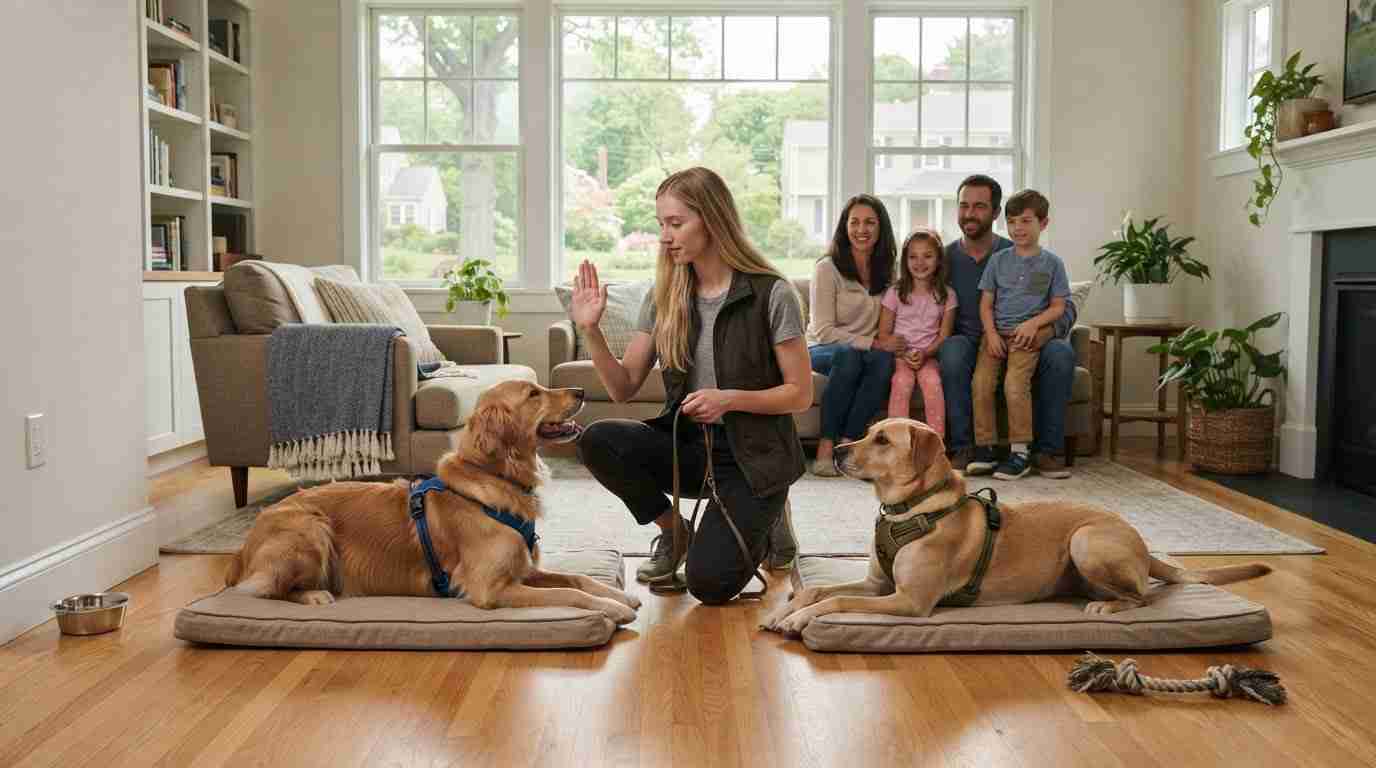
Staring and blocking can be early warning signs of conflict between dogs who share a home. Managing sibling rivalry between dogs in Holden, MA starts with noticing these signals, identifying triggers, and calmly creating space before tension escalates. Don’t leave dogs who are struggling to work it out on their own.
It can be upsetting when furry family members who once seemed comfortable together begin guarding food, toys, beds, or your attention. That change doesn’t mean you’ve failed them. This guide explains common triggers, how to observe what may be prompting conflict, and what staring, blocking, and resource guarding can look like. You’ll also learn practical ways to reduce competition and when professional behavior support may help your dogs feel calmer around each other.
Key Takeaways
- Look for patterns around food, toys, resting spots, attention, and changes in a dog’s health or environment to understand what may be fueling tension.
- Observe what happens just before and after a conflict; the dog who reacts visibly may not be the one who started the interaction.
- Notice hard staring, blocking access, and guarding valued items as early signs of discomfort, and calmly create space before tension builds.
- Prevent unsupervised contact when the dogs are in conflict, and seek reward-based behavioral support if fights occur or you feel unsure how to keep them safe.
1. Causes and triggers of rivalry between household dogs
“Sibling” dogs can be littermates or unrelated housemates, and conflict can start during puppyhood or later. Household changes, health problems, diet, and competition over food, toys, beds, favorite spots, or family attention may contribute. Tension can emerge as dogs approach social maturity, commonly around 18-24 months; another reported range is 12-36 months. Dogs of the same sex may fight more often, with conflicts sometimes most severe between females.
Favoritism and inconsistent rules can add pressure. For example, letting one dog claim the couch while repeatedly moving the other away can create competition. Set the same boundaries for both dogs around furniture, meals, play, and greetings. Ask an approaching dog to sit and wait while you give the other attention, then switch turns. Praise calm behavior, such as both dogs resting quietly in the same room.
To reduce tension, note the triggers and manage access: feed dogs separately, put away contested toys, and give each dog individual attention and activity. Tailor the plan to their health, routines, and shared spaces. Don’t leave dogs who fight together unsupervised; separate them whenever you can’t actively supervise.
Contact a veterinarian when conflict follows a health change or one dog seems painful, since discomfort can affect behavior. Seek qualified behavioral support promptly after physical fights, escalating threats, or repeated conflict. A professional can assess the dogs and help shape a plan for your household.
To find qualified help near Holden, look for credentials such as CBCC-KA and experience with fear, resource guarding, and aggression between housemates. For trainers specializing in household conflict, seek professionals who assess both dogs and use reward-based behavior support. These steps can guide managing sibling rivalry between dogs in Holden, MA.
2. Identifying which dog is provoking conflict
In a household with multiple dogs, the dog who barks or snaps first may be responding to pressure rather than starting the conflict. Watch what happens beforehand: one dog may quietly follow, stare at, or crowd the other near a doorway, resting spot, or person. The other dog’s growl may be a request for space. Dogs with similar temperaments can also clash, especially when both approach the same resource.
Look for patterns, not a single “instigator.” From a safe distance, note which dog approaches, where each dog is positioned, what resource is nearby, and how their bodies change. Does tension begin when one dog enters the kitchen, or when a person greets the other? Record observations during ordinary routines; don’t stage encounters to test a theory. A professional may need to observe the dogs together to understand their behavior in context.
Punishment can make the situation harder to assess. Scolding or startling a dog for growling may suppress that warning without changing the fear or discomfort underneath, and punishment-based responses can increase aggression. Instead, calmly interrupt early tension by calling the dogs apart or redirecting each to a separate activity. Reward relaxed behavior at a distance, such as settling on separate mats.
If conflict escalates, don’t reach between fighting dogs; redirected aggression can injure a person. Use barriers to separate them when safe, then prevent another close encounter while you assess the trigger. For practical guidance on reward-based dog training methods, focus on teaching calm alternatives rather than assigning blame.
3. Recognizing staring, blocking, and resource guarding
Conflict often starts quietly. A dog may freeze, close its mouth, and stare at a housemate approaching a chew, resting place, or person. Blocking may look like standing across a doorway or repeatedly stepping between another dog and the couch. These behaviors restrict access and may signal discomfort before barking or fighting begins. Watch the whole interaction, including the other dog’s response.
Resource guarding can involve food, toys, beds, favorite locations, or family attention. A dog might hover over a bowl, carry a toy away, stiffen when approached, or growl as another dog comes closer. Guarding valued resources can fuel rivalry. Feed dogs separately, put contested items away when they’re together, and manage access to beds or couches rather than forcing them to share.
At the first hard stare or blocked path, calmly interrupt and create space. Call the dogs apart or guide them behind separate barriers, then reward relaxed behavior at a distance. Don’t punish a growl or reach in to grab a guarded item: punishment can increase aggression, and sudden handling may intensify conflict. If tension returns around a resource, keep it out of shared access and note what happened beforehand.
Repeated guarding, lunging, or fighting calls for a tailored behavior plan. A qualified professional can assess the dogs’ signals and help you practice safer alternatives without forcing close contact. For guidance on behavior around other dogs, get support with dog reactivity and build a calmer approach to shared spaces.
I Wuff You Dog Training: Reactive Dog Training
I Wuff You Dog Training offers Reactive Dog Training for dogs experiencing fear, anxiety, or reactivity. A force-free, positive-reinforcement plan considers what your dog feels around a trigger, not only the visible behavior. With exposure therapy, a fearful or traumatized dog can encounter triggers gradually, at a manageable distance, while learning that calm responses are safe. The trainer is a Certified Behavior Consultant Canine-Knowledge Assessed (CBCC-KA), a Certified Professional Dog Trainer-Knowledge Assessed (CPDT-KA), and a Behavior Adjustment Training (BAT) Advocate through the Grisha Stewart Academy. She is the only CBCC-KA certified trainer in the Worcester area.
Professional guidance can help you plan controlled public outings and adjust the distance or difficulty when your dog shows stress. Reactive Dog Training focuses on building practical skills without forcing encounters. To explore support for your dog, contact I Wuff You Dog Training or visit iwuffyoudogtraining.com.
Build a calmer routine, one step at a time
Progress can start with a practical household goal: help each dog feel secure during daily routines, with space to rest and engage at a comfortable pace. Keep notes on what’s working, and adjust routines as your dogs’ needs change. For families managing sibling rivalry between dogs in Holden, MA, individualized support can help make the next steps easier to plan.
I Wuff You Dog Training offers Reactive Dog Training, Private In-Home Training, and Puppy Behavior Training. A trainer can help you turn your observations into a behavior plan suited to your dogs and home. If you’re ready to explore support, contact I Wuff You Dog Training. You and your dogs can work toward a more peaceful life together, with patience and thoughtful guidance.
Frequently Asked Questions
How can I treat this problem?
Address conflict by preventing repeated incidents and teaching each dog calmer ways to navigate household routines. A plan for managing sibling rivalry between dogs in Holden, MA can begin with a simple record of triggers, distance, and each dog’s response. Then practice separate settling activities and brief, calm exposure to shared spaces. If fear or anxiety drives the behavior, seek qualified behavioral support.
How should I break up fighting between dogs?
Don’t grab collars, reach between dogs, or put your body near their mouths. If you can do so safely, use a solid barrier, such as a door or large board, to create separation. Once apart, keep the dogs in different secure spaces and avoid immediate reintroductions. Check each dog for injuries and seek veterinary care if either appears hurt.
What if neither dog will defer or submit?
Neither dog needs to submit for the household to become safer. Rather than expecting one dog to yield, teach each to respond to a separate cue, such as going to an individual mat. Practice when both are relaxed and apart, then use the behavior during low-pressure routines. Avoid forcing close contact to test which dog is “in charge.”
What should I do when one of my dogs challenges another?
Interrupt early, before a stare becomes a lunge. Use a familiar recall or cheerful cue to guide the approaching dog away, then reward calm movement to a separate activity. If the dog can’t disengage, increase distance with a barrier instead of repeating commands. Note the location and trigger, such as a narrow hallway, and adjust future routines.
What causes sibling rivalry between dogs living in the same home?
Conflict can arise from competition, discomfort, or stress, not simply because dogs are related. A change such as a new feeding location, altered household schedule, or crowded resting area can affect how dogs respond to each other. Track when tension starts and what changed around that time. This context can help distinguish a recurring trigger from a one-off disagreement.