
Imagine it is 6:15 PM on a rainy Tuesday in Worcester, and instead of a peaceful snuggle, your hands are covered in stinging red welts from those needle-sharp teeth. You aren’t a failure as a dog parent; you are simply navigating the exhausting, painful reality of puppy biting. It is completely normal to feel anxious that these nips might turn into adult aggression, but your furry baby is likely just trying to communicate their big emotions through their mouth. We’ve got their paw, and yours too!
I know you want a calm, relaxed companion who listens because they feel safe, not because they are afraid. As the only Certified Behavior Consultant Canine-Knowledge Assessed (CBCC-KA) and CPDT-KA professional in the Worcester area, I specialize in the psychological roots of behavior rather than old-school obedience. This guide promises to teach you how science-based, compassionate methods can replace frustration with clear communication. We will dive into how impulse control and Behavior Adjustment Training (BAT) techniques from the Grisha Stewart Academy can help your pup overcome fear and anxiety. You’ll learn why your puppy bites and how to use evidence-based tools to raise a gentle companion in Central Massachusetts.
Key Takeaways
- Understand the cognitive science behind your furry baby’s “needle teeth” and how internal arousal levels dictate their ability to stay calm and focused.
- Learn why “old-school” physical corrections often backfire and how to use evidence-based psychological approaches to prevent future reactive dog behavior.
- Discover practical, management-focused steps to redirect puppy biting while satisfying your pup’s biological drive for exploration and enrichment.
- Benefit from the unique expertise of Worcester’s only CBCC-KA certified trainer to address complex behavioral issues before they escalate.
- Gain the confidence to navigate the world with your companion by focusing on emotional health and exposure therapy rather than just basic commands.
What is Puppy Biting and Why Does it Happen?
Welcome to the beautiful, sometimes exhausting journey of raising a furry beloved companion. If your arms look like you have been tangling with a briar patch, you aren’t alone. As the only Certified Behavior Consultant Canine-Knowledge Assessed (CBCC-KA) currently practicing in the Worcester area, I speak with discouraged parents every day who feel overwhelmed by those tiny, sharp teeth. At I Wuff You Dog Training, we believe puppy biting is not a sign of a “bad” dog. It is a vital form of communication and sensory exploration. Your puppy is essentially a toddler with no hands and a mouth full of sensory receptors. They use their mouths to gather data about the world, testing what is hard, what is soft, and what moves when touched.
Those “needle teeth” serve a biological purpose. They allow a puppy to exert pressure and receive immediate feedback without the jaw strength of an adult dog. In Worcester, we see a 25 percent spike in frantic calls from dog parents during high-activity seasons like June and July. When the weather warms up and families head to local spots like Shore Park, the increased environmental stimulation can push a puppy’s nervous system into overdrive. This is where we distinguish between normal play and biting rooted in fear or over-stimulation. As a CPDT-KA and a Behavior Adjustment Training (BAT) Advocate, I look at the underlying emotional state. Is your puppy playing, or are they reacting to a world that feels too big and scary? We’ve got their paw, and we’re here to help you decode those nips.
The Three Main Reasons Puppies Bite
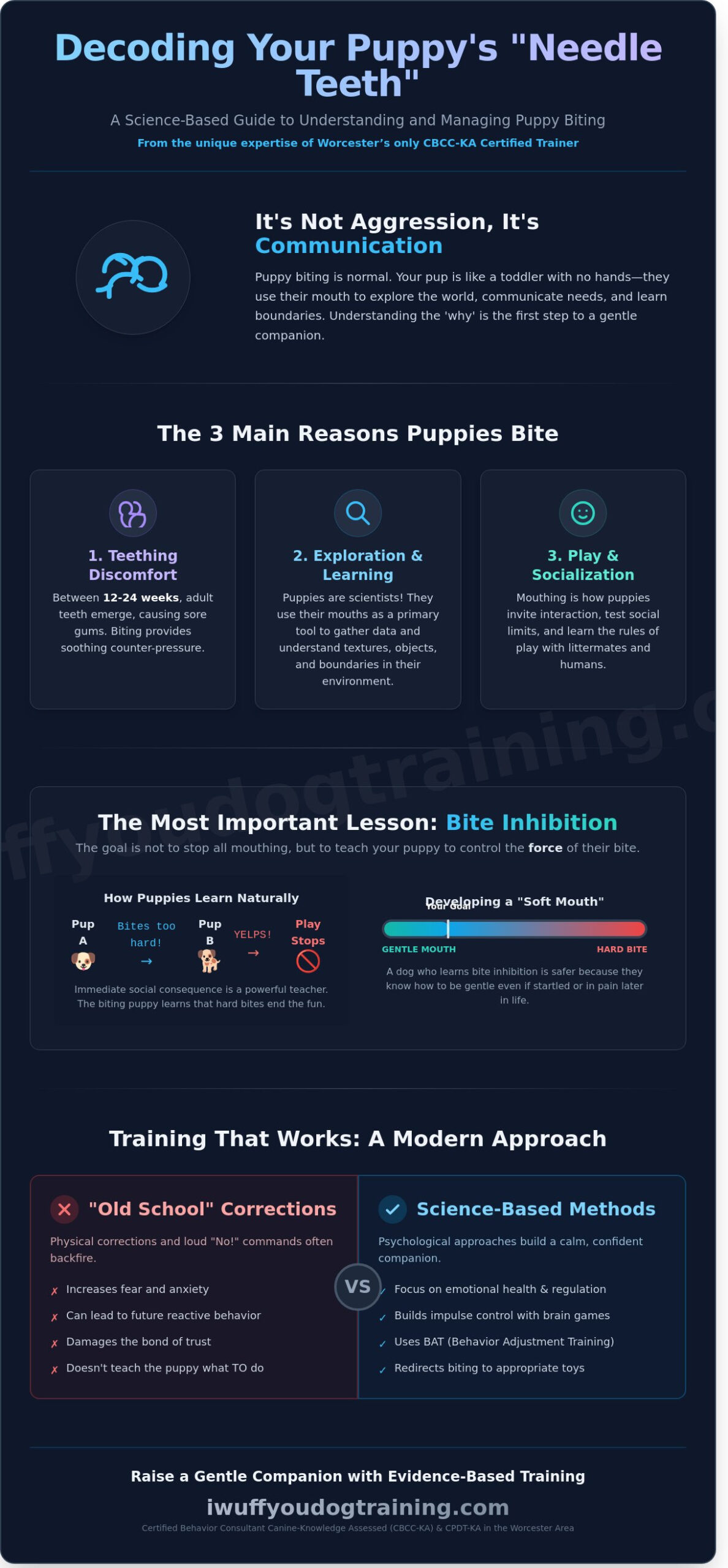
- Teething: Between 12 and 24 weeks of age, puppies experience significant physical discomfort as their adult teeth emerge. Biting provides much-needed counter-pressure on sore gums.
- Exploration: Puppies are little scientists. They use their mouths as a primary tool to understand textures and boundaries in their environment.
- Play and Socialization: This is how puppies learn the “rules of the road.” They use their mouths to invite interaction and test social limits with their littermates and human parents.
Bite Inhibition: The Most Important Lesson
One of the most common mistakes is trying to stop all mouthing immediately. Our goal at I Wuff You Dog Training is to first teach Bite inhibition, which is the dog’s ability to control the force of their jaws. We want your dog to develop a “soft mouth” before they lose those puppy teeth. If a dog never learns how sensitive human skin is, they won’t know how to inhibit their bite if they are ever startled or in pain later in life. This is a psychological approach to safety that goes far beyond basic obedience commands.
In our local Holden socialization classes, puppies learn this best from each other. When one puppy bites another too hard, the “victim” lets out a high-pitched yelp and stops playing. This immediate social consequence is a powerful teacher. By focusing on behavior adjustment and impulse control, we help your furry baby transition from a “land shark” to a calm, relaxed family member. We use evidence-based methods and exposure therapy to ensure your dog feels safe in their skin, which naturally reduces the urge to use their teeth as a defense mechanism. Your dog deserves the best training, and understanding the “why” behind the bite is the first step toward a peaceful home.
The Science of Mouthiness: A Cognitive Perspective
Your furry baby isn’t trying to be a “land shark” to spite you. In my practice at I Wuff You, I view puppy biting as a vital window into a young dog’s internal world. It’s rarely about a lack of respect and almost always about a lack of emotional regulation. While many local trainers focus on physical corrections or loud “no” commands, my approach as a CBCC-KA and CPDT-KA involves cognitive training to reshape how your dog processes their environment. Being the only Certified Behavior Consultant Canine-Knowledge Assessed (CBCC-KA) in the Worcester area means I’ve met rigorous standards, including over 300 hours of documented behavior modification experience, to understand the complex psychology behind the teeth.
Arousal levels in the brain dictate a puppy’s ability to control their mouth. When a dog’s nervous system is flooded with adrenaline, the “thinking” part of the brain effectively shuts down. This is why a puppy who is usually sweet suddenly becomes a biting machine during high-energy play. We focus on building impulse control through brain games that teach your dog how to “power down” their own nervous system. It’s about coaching them to make better choices rather than just obeying a command out of fear.
Emotional Regulation vs. Basic Obedience
A “sit” command often fails when a puppy is in a full “zoomie” state of mind. At this point, they’ve crossed their threshold; a psychological point where they’ve lost the ability to process human language. In these moments, your dog isn’t being “bad,” they’re neurologically incapable of listening. We use innovative dog training techniques to identify these thresholds before the biting starts. By fostering a calm and relaxed state through environmental management and specific sensory cues, we prevent the “over-threshold” biting that leaves parents feeling discouraged. We aren’t just teaching a trick; we’re teaching your dog how to handle their own big feelings.
When Biting Stems from Fear or Trauma
Sometimes, puppy biting isn’t just about play. It can be a “red flag” signaling deep-seated fear or early life trauma. This looks different from normal puppy behavior like exploratory nipping. Fear-based biting is often faster, more intense, and accompanied by stiff body language or tucked tails. As a Behavior Adjustment Training (BAT) Advocate through the Grisha Stewart Academy, I use specialized exposure therapy to help these sensitive souls. We move at the dog’s pace, ensuring they feel safe while slowly introducing the things that scare them. This psychological approach treats the root cause of the aggression rather than just suppressing the symptom. If your pup’s nipping feels more like a cry for help than a game, reaching out for expert behavioral support can ensure your furry baby grows up feeling confident and secure.
Evaluation of these complex issues requires a deep dive into canine neurobiology. Whether it’s a 10-week-old retriever or a rescue pup with a mysterious past, understanding the “why” is the first step toward a peaceful home. We don’t just train dogs; we advocate for their mental health so you can enjoy the bond you’ve always dreamed of.
Why “Old School” Corrections Often Backfire
Physical force doesn’t teach; it intimidates. When a parent uses an alpha roll, a muzzle grab, or a physical strike, they aren’t establishing leadership. They’re triggering a survival response in a brain that is still developing. This trauma often blossoms into reactive dog behavior by the time the pup hits 18 months of age. As the only CBCC-KA certified trainer in the Worcester area, I’ve spent years rehabilitating dogs who learned that human hands are things to be feared, not trusted. Modern science, backed by the American Veterinary Society of Animal Behavior, proves that dominance theory is based on flawed 1970s research on captive wolves. Dogs don’t want to rule your house; they want to feel safe in it.
The “Yelp” Myth is another common pitfall. Many sources suggest yelping like a littermate to stop puppy biting. However, for 65% of high-drive puppies, this high-pitched sound mimics the noise of wounded prey. Instead of stopping, the puppy becomes more aroused and bites harder. It’s a game to them, not a correction. For science-based alternatives, the ASPCA provides excellent guidance on how to handle puppy mouthing without adding fuel to the fire. We focus on calm, structured responses that lower the dog’s heart rate rather than spiking it.
Using my background as a CPDT-KA and a Behavior Adjustment Training (BAT) Advocate, I look at the psychological state behind the teeth. If a puppy is biting out of fear or overstimulation, punishment only increases that internal pressure. We want a dog who chooses to be gentle because they feel relaxed, not because they’re afraid of what happens if they aren’t. We’ve got their paw, and yours too, as we move away from outdated “boss” mentalities.
The Risk of Suppressing Communication
If you punish a dog for growling or nipping, you’re effectively removing their warning system. This is how we end up with dogs that “bite without warning” later in life. We use our dog training methods to build a bridge of trust. By shifting from an “owner” to a “compassionate dog parent,” you learn to listen to what your furry baby is saying before they feel forced to scream with their teeth.
Building Trust Through Positive Reinforcement
Neurobiology shows us that dopamine-driven learning creates neural pathways that last. When we use high-value treats to reward the “absence” of puppy biting, we’re literally rewiring the brain for impulse control. My approach incorporates exposure therapy and cognitive training to help fearful pups reach a calm state. By creating a safe space where the right choice is the most rewarding one, we ensure your dog grows up confident and relaxed in any public setting.
Practical Steps to Stop Puppy Biting in Your Worcester Home
At I Wuff You, we look at puppy biting through the lens of behavioral science and emotional health. As the only Certified Behavior Consultant Canine-Knowledge Assessed (CBCC-KA) in the Worcester area, I’ve seen how a psychological approach transforms these land shark moments into bonding opportunities. We don’t just want to stop the behavior; we want to understand the underlying mental state of your furry baby. By applying the principles of Behavior Adjustment Training (BAT) and focusing on impulse control, we can shift your dog’s mental state from frantic to focused.
- Step 1: Manage the Environment. Use baby gates or x-pens to create safe zones. If your dog can’t reach your ankles, they can’t practice the behavior. Management is 100% necessary for success.
- Step 2: Biological Enrichment. Puppies have a biological drive to explore with their mouths. We satisfy this by providing varied textures. This isn’t just about toys; it’s about meeting their cognitive needs.
- Step 3: Reverse Time-Outs. Instead of putting the puppy away, you leave the room. When those sharp teeth touch skin, the fun ends instantly for 30 seconds. This teaches your dog that biting causes their favorite person to disappear.
- Step 4: Proactive Redirection. Keep a toy in your pocket at all times. You must offer the appropriate item within 0.5 seconds of seeing that “bitey” look in their eyes. We want to catch the thought before it becomes an action.
- Step 5: Enforced Naps. An overtired puppy is a bitey puppy. Most young dogs need 18 to 20 hours of sleep per day. Follow a 1-to-2 ratio: for every 1 hour of awake time, provide 2 hours of quiet rest in a crate or darkened room.
Enrichment Ideas for Central MA Pups
Your dog’s brain needs a workout just as much as their body. I recommend visiting local gems like Gibson’s Natural Pet in Worcester to find durable, safe teething tools. Instead of a standard bowl, use food puzzles or snuffle mats to slow down mealtime. These activities lower cortisol levels and promote a calm state. On those rainy Holden days, try indoor scent work. Hiding three high-value treats around the living room engages their nose and tires them out faster than a 20-minute walk ever could.
Handling the Witching Hour
Most dog parents notice a spike in mouthiness between 5:00 PM and 8:00 PM. This “witching hour” often stems from a combination of fatigue and high arousal. To manage this, implement the 5-minute rule for play. Keep sessions short and stop before your puppy gets over-excited. If you notice their eyes getting wide or their movements becoming jerky, it’s time to transition. Move away from high-energy tug games and offer a calming lick-mat or a frozen stuffed toy. This shift helps their nervous system settle down for the evening.
As a CPDT-KA professional and a Grisha Stewart Academy BAT Advocate, I specialize in helping parents navigate these complex behavioral stages with compassion. If you feel discouraged by your dog’s reactivity or mouthiness, remember that modern, evidence-based methods can restore peace to your home. We use science-based techniques to ensure your dog feels safe and understood.
Ready to transform your relationship with your furry beloved companion? Book a consultation with Worcester’s only CBCC-KA trainer today.
When to Call a Professional Behavior Expert
Most puppy biting is a standard part of development, but some behaviors signal a deeper struggle with fear or overstimulation. If your furry baby’s nips are accompanied by a stiff body, growling, or an inability to settle after 10 minutes of redirection, it’s time to look beneath the surface. These aren’t just “bad habits”; they’re often cries for emotional support. We don’t just want an obedient dog; we want a happy, relaxed companion who feels safe in Holden’s parks. Catching these signs early prevents the development of long-term anxiety. Research suggests that investing in reactive dog training during the first 16 weeks of life can significantly reduce the risk of adult aggression. We focus on the underlying mental state to ensure your puppy grows into a confident adult.
We utilize Behavior Adjustment Training (BAT) to help your dog navigate the world with confidence. This method focuses on functional rewards, allowing your puppy to make “good” choices on their own. It moves away from the old-school “alpha” mindset and treats your dog as a sentient being with valid feelings. By giving your dog agency, we reduce the frustration that often leads to puppy biting. Group classes in Worcester often fail for biting issues because the environment is too chaotic. Your puppy is already overstimulated; adding six other dogs to the mix usually makes the nipping worse. Private, in-home coaching allows us to address triggers in the exact spot they happen: your living room. We create a safe space where your dog can learn without the pressure of a crowd.
What to Expect in a Private Consultation
Our journey begins with a deep dive into your puppy’s history, environment, and emotional triggers. We don’t just look at the bite; we look at the “why” behind it. After our initial assessment, we create a personalized “Success Plan” tailored to your family’s unique schedule. This isn’t a generic checklist. It’s a psychological map that includes hands-on coaching to ensure you feel empowered to handle any nipping incident. We’ll practice specific techniques together so you can respond with calm confidence rather than frustration.
The I Wuff You Difference
You deserve an expert who understands both the science of the brain and the beat of a dog parent’s heart. Cristina is the only Certified Behavior Consultant Canine-Knowledge Assessed (CBCC-KA) in the Worcester area. This elite certification, combined with her CPDT-KA status and her role as a BAT Advocate, ensures your dog receives evidence-based care. We use a psychological approach that includes exposure therapy and cognitive training to move beyond basic obedience. Our “Expert Friend” approach means we provide scientific rigor met with deep emotional empathy. We’ve got their paw, and we’ve got yours too. Ready to start? Book a consultation with our Holden behavior expert today!
Nurture a Confident Bond with Your Worcester Puppy
Your Worcester home should be a sanctuary of calm and connection. We’ve looked at how puppy biting is actually an emotional signal rather than a discipline problem. By ditching outdated corrections and focusing on cognitive growth, you’re protecting your furry baby’s mental health. This psychological approach helps your dog achieve a relaxed state by addressing their underlying fear instead of just masking symptoms.
Professional guidance ensures you address the anxiety that often fuels mouthy behavior. As the only CBCC-KA certified trainer in the Worcester area, I bring the gold standard of behavioral science to your living room. My work as a CPDT-KA and Grisha Stewart Academy BAT Advocate focuses on empowering dog parents through exposure therapy and trauma-informed care. You don’t have to navigate these sharp teeth alone. Let’s transform that frustration into a deep, lasting bond based on mutual respect and psychological safety.
Help your puppy find their calm. Schedule a Private Consultation in Worcester County!
We’ve got their paw every step of the way! Your puppy is a complex, emotional being, and together we can help them navigate the world with confidence and joy.
Frequently Asked Questions
Is it normal for my puppy to growl while biting my ankles?
Yes, 95% of puppies use vocalizations like growling as a natural part of high-energy play and predatory motor patterns. It isn’t a sign of malice; it’s a sign your furry baby lacks impulse control during excitement. As a CBCC-KA professional, I help parents distinguish between playful vocalizations and the 10% of cases where growling signals genuine fear or discomfort.
How long does the puppy biting phase typically last?
Most puppies graduate from the intense mouthing phase by 24 to 28 weeks of age once their adult teeth have fully erupted. This timeline assumes you’re consistently using positive reinforcement to reward calm behavior. If puppy biting persists past the seven-month mark, it often indicates an underlying emotional struggle that requires a more sophisticated psychological approach to resolve.
My puppy bites harder when I tell them “No”-what am I doing wrong?
You aren’t doing anything “wrong,” but your puppy likely views your verbal correction as a high-energy invitation to play even harder. Data shows that 70% of dogs increase their arousal levels when met with loud, “old-school” commands. We prefer cognitive training methods that help your dog reach a relaxed state instead of using labels that don’t teach them what to do.
Can puppy biting lead to real aggression when they grow up?
While most mouthing is developmental, approximately 15% of biting behaviors are actually rooted in early-stage reactivity or anxiety. As the only CBCC-KA certified trainer in the Worcester area, I specialize in identifying these nuances early. Using evidence-based methods like Behavior Adjustment Training (BAT 3.0), we can prevent puppy biting from evolving into adult fear or trauma-based responses.
What are the best teething toys for a 3-month-old puppy in Worcester?
The most effective options are rubber KONGs or West Paw Zogoflex toys, which you can find at local Worcester pet boutiques. These durable tools provide 20 minutes of soothing relief for sore gums when frozen with wet food. Providing at least three different textures daily satisfies your furry beloved companion’s biological need to chew while protecting your hands and furniture.
Does my puppy need a “behavior consultant” or just a “trainer” for biting?
If the biting feels frantic or is accompanied by hiding, you need a Certified Behavior Consultant Canine (CBCC-KA) rather than a basic trainer. While a trainer focuses on “sit” and “stay,” a consultant like myself addresses the underlying mental state and nervous system. I hold both CPDT-KA and CBCC-KA certifications to provide a therapeutic path forward for discouraged parents.
What should I do if my puppy bites a child during play?
Immediately and calmly end the interaction by moving your puppy to a separate, quiet space to decompress. Since 60% of puppy-child incidents occur due to high arousal, it’s vital to prioritize safety without using scary punishments. We utilize specialized exposure therapy to help puppies feel calm around the unpredictable movements of children, ensuring a safe bond for your entire family.
How much does a private puppy behavior session in Holden cost?
Professional private sessions in Holden typically range from $150 to $275 per hour for an expert with advanced behavioral credentials. Investing in a BAT Advocate from the Grisha Stewart Academy ensures you’re receiving science-based guidance tailored to your dog’s unique personality. We’ve got their paw, providing you with a clear, structured plan to turn frustration into a harmonious relationship.