

What if your dog’s low growl over a favorite toy isn’t a grab for power, but a cry for help from a place of deep anxiety? It’s heartbreaking to feel afraid in your own living room or to feel your stomach knot with worry when you’re heading toward Elm Park. You want a peaceful home where your furry baby feels safe, and you’re tired of “alpha” advice that only makes things worse. We’ve got their paw! As the only Certified Behavior Consultant Canine-Knowledge Assessed (CBCC-KA) in the Worcester area, I specialize in resource guarding training Worcester MA that moves beyond basic obedience to address your dog’s underlying mental state. My approach combines my CPDT-KA expertise and BAT Advocate training to use evidence-based psychological methods like exposure therapy.
In this guide, you’ll discover how to transform guarding behaviors into calm confidence. We will dive into the “why” behind the behavior and provide actionable steps to heal your dog’s fear. You’ll learn how my specialized certifications allow me to create a therapeutic path toward a relaxed, happy life together. Let’s turn that frustration into hope and get your dog’s reactivity under control once and for all!
Key Takeaways
- Understand the biological role of the amygdala to see guarding as a manageable survival instinct rather than a behavioral flaw.
- Discover why “leadership-based” training fails and how science-based resource guarding training Worcester MA protects the emotional bond with your furry baby.
- Learn actionable “Trade Up” games and management strategies to create a safe, stress-free environment in your Central MA home.
- Benefit from the expertise of the area’s only CBCC-KA certified behavior consultant to address fear and trauma through professional exposure therapy.
- Gain the empowerment you need as a dog parent to help your reactive companion achieve a calm state, making public outings enjoyable again.
Understanding Resource Guarding in Your Worcester Home
Living with a dog who snaps when you approach their food bowl or favorite toy can feel incredibly isolating for a dog parent. It’s heartbreaking when your furry beloved companion views you as a threat rather than a source of safety. You aren’t alone in this struggle. Resource guarding is a natural survival instinct, but it’s one we can manage through science-based resource guarding training Worcester MA. Common triggers in local households often include high-value marrow bones, favorite spots on the couch, or even specific human family members.
Many people are told to “show the dog who’s boss” by taking their food away, but this old-school dominance theory often makes the behavior much worse. When you forcibly remove an item, you confirm your dog’s fear that you’re a threat to their resources. As the only Certified Behavior Consultant Canine-Knowledge Assessed (CBCC-KA) in the Worcester area, I focus on the internal emotional state of your dog. We move beyond basic obedience to address the underlying anxiety through a psychological approach. By understanding that your dog is struggling, not being “bad,” we can move from fear to a place of deep empathy and effective solutions.
Recognizing the Early Warning Signs
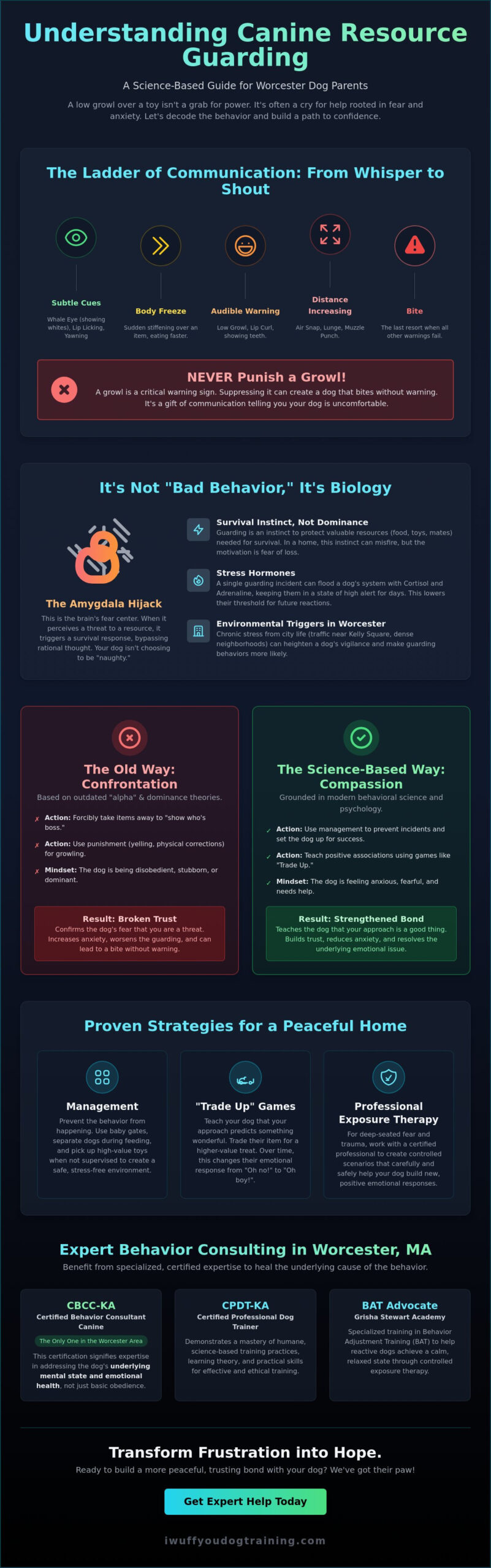
Your dog is always communicating, often through very subtle cues. Before a growl ever happens, you might notice “whale eye” where the dog shows the whites of their eyes, or a sudden body stiffening known as a “freeze” over an item. Secondary signals include low growls, lip curling, and air snapping. It’s vital that you never punish a growl! A growl is a gift of communication that tells us your dog is uncomfortable. If we suppress the growl through punishment, we risk creating a dog that bites without any warning at all. We want to listen to what their body is telling us so we can help them feel secure.
Resource Guarding vs. Aggression: What’s the Difference?
It’s important to understand that guarding is typically a distance-increasing behavior rooted in anxiety rather than a desire to “attack.” Resource guarding is an emotional response to perceived scarcity. This fear often manifests during walks in Central MA parks like Elm Park or Green Hill Park, where a dog might guard a found scrap or even their parent from a passing stranger. My work as a CPDT-KA and a Grisha Stewart Academy BAT Advocate focuses on helping dogs reach a calm, relaxed state through reactive dog training and controlled exposure therapy. By Understanding Resource Guarding as a biological drive, we can use evidence-based methods to change how your dog feels about the world. You don’t have to stop taking your dog out in public; you just need the right tools to navigate those moments together! We’ve got their paw!
The Psychology of Protection: Why Dogs Guard Food and Toys
As the only Certified Behavior Consultant Canine-Knowledge Assessed (CBCC-KA) professional in the Worcester area, I know that resource guarding isn’t a matter of “bad manners.” It’s a deep-seated emotional response. When your dog lunges over a bowl, they aren’t trying to be the boss. Their amygdala has simply hijacked their brain. This almond-shaped structure governs fear and survival; it doesn’t care about your “drop it” command when it senses a threat. For many dog parents, this behavior feels like a betrayal of the bond, but it’s actually a cry for help from a brain stuck in survival mode.
Living in a vibrant city like Worcester brings unique challenges. The constant noise from traffic near Kelly Square or the density of neighborhoods near Shrewsbury Street can heighten a dog’s vigilance. This chronic environmental stress lowers their reactive threshold. It makes resource guarding training Worcester MA a critical need for local families who want to enjoy the city without fear. My approach as a CPDT-KA and Grisha Stewart Academy BAT Advocate focuses on lowering that stress through science-based methods. We move beyond basic obedience to address the underlying mental state of your furry baby.
The Science of Canine Emotions
Dogs possess a “seeking system” that drives them to explore and acquire resources. When this system is fueled by anxiety, it creates an intense need to protect what they’ve found. High levels of cortisol and adrenaline can keep a dog in a state of “high alert” for days after a single guarding incident. We use specialized techniques to bring these levels down. You can learn more about our cognitive training approach to see how we help dogs shift from a state of panic to one of calm curiosity.
Trauma and Fear-Based Guarding
Past experiences often dictate how much a dog values a resource. If your furry beloved companion spent time in a shelter or on the streets, they might have a “scarcity mindset” that makes a simple chew toy feel like a matter of life and death. We treat this through a psychological lens, using exposure therapy to slowly change their emotional association with your presence. It is vital to understand that a dog’s growl is their way of communicating a lack of safety. Instead of punishing the warning, we use Proven Strategies for Aggression to build a foundation of trust.
Your dog deserves to feel safe in their own home. If you’re struggling with a reactive pup, we’ve got their paw and can help you navigate these complex emotions together.
Leadership vs. Science: Choosing the Right Training Method in Central MA
Families across Central Massachusetts often hear outdated advice about being the “Alpha” or the “Pack Leader.” This old-school mentality suggests you must dominate your dog to stop them from growling over a bone. Science tells a different story. Resource guarding is a behavior rooted in deep-seated fear and anxiety, not a quest for world domination. When you seek resource guarding training Worcester MA, you need a professional who understands the psychological state of your dog. Our lead trainer is the only Certified Behavior Consultant Canine-Knowledge Assessed (CBCC-KA) in the Worcester area. This expertise, combined with being a CPDT-KA and a Grisha Stewart Academy BAT Advocate, allows us to address the root cause of the behavior rather than just the symptoms.
Traditional “leadership-based” training often involves taking things away from a dog to “show them who’s boss.” This approach is dangerous. It validates the dog’s fear that people are a threat to their resources. Instead, we use positive reinforcement to change the dog’s underlying emotional response. We want your dog to feel happy, not threatened, when someone approaches their bowl. This shift in methodology creates a calm and relaxed state that lasts. You can read more about our approach in our guide to Solving Dog Behavior Problems in Worcester County, which helps parents understand the science of canine emotions.
The Danger of Aversive Tools
Using tools designed to cause discomfort can backfire spectacularly with guarding dogs. We avoid these aversive methods because they escalate tension:
- Prong and Choke Collars: These cause physical pain that the dog associates with the person approaching them.
- Shock Collars: These can trigger “redirected aggression,” where the dog bites the nearest person because they feel a sudden, painful zap.
According to the Veterinary Information Network guide to resource guarding, management and behavior modification are the safest ways to handle these cases. Suppressing a growl with punishment doesn’t stop the dog from wanting to guard; it just removes the warning sign before a bite. You can explore our science-based dog training methods to see how we prioritize safety and emotional wellness in resource guarding training Worcester MA.
Cognitive Training: Empowering the Dog Parent
We believe in reframing your relationship from “owner and property” to “parent and family.” Our cognitive training programs focus on building a bond based on mutual respect and clear communication. We utilize evidence-based techniques like exposure therapy to help dogs overcome trauma and fear at their own pace. Reactivity shouldn’t mean your dog is grounded forever. With professional guidance, your dog can learn to trust again. Worcester parents prefer our methods because we treat their furry beloved companions like the complex, emotional beings they are. We’ve got their paw!
Proven Strategies: From Management to Exposure Therapy
Your journey toward a peaceful home starts with management. In Holden or West Boylston, this means setting up your environment so your dog doesn’t feel the need to protect their treasures. We stop the rehearsal of the behavior immediately. If your dog guards their bowl, we feed them in a separate room. If they guard the sofa, we use baby gates. This isn’t “giving in.” It’s reducing cortisol levels so your dog’s brain can finally move into a state of learning. Management creates a safety bubble where your dog can stop feeling like they’re constantly under siege.
The ‘Trade Up’ game is our foundational tool for resource guarding training Worcester MA. We teach your furry baby that giving something up results in a much better reward. If they have a boring tennis ball, you offer a piece of boiled chicken. You aren’t just taking an item; you’re providing a high-value upgrade. This builds a psychological bridge of trust. Your dog stops seeing you as a threat and starts seeing you as a source of better things. Over time, the sight of you approaching while they have a prize becomes a reason for excitement, not anxiety.
The BAT 3.0 Protocol for Guarding
As a Certified Behavior Consultant Canine-Knowledge Assessed (CBCC-KA), I’m the only professional with this specific certification in the Worcester area. This expertise allows me to implement Behavior Adjustment Training (BAT 3.0) with precision. Through the Grisha Stewart Academy, I’ve learned how to help dogs make better choices by using functional rewards. In Shrewsbury, we often use the leash as a safety net during outdoor sessions. This gives your dog the freedom to investigate their environment while staying safe. You can explore our specialized BAT programs to see how we empower your dog to feel in control of their own safety.
Desensitization and Counter-Conditioning
We use exposure therapy to help dogs overcome deep-seated fear and trauma. This isn’t about “facing fears” in a scary way. It’s a structured process of changing your dog’s emotional response. We start at a distance where your dog feels 100% safe. We might simply walk past them while they have a low-value toy and toss a piece of steak. Eventually, your approach becomes the cue for something wonderful. It’s vital to remember that exposure therapy must always stay below the dog’s threshold of reactivity. If your dog growls, we’ve gone too far too fast. We listen to what their body language tells us. My CPDT-KA certification ensures we use evidence-based methods to keep your dog calm and relaxed throughout the process.
Don’t let reactivity keep you trapped inside. With the right psychological approach, we can get these big emotions under control. We’ve got their paw! Start your dog’s transformation today.
Expert Behavior Consulting in Worcester: Healing the Bond with I Wuff You
Finding the right resource guarding training Worcester MA can feel like a heavy burden for any dog parent. You want the best for your furry baby, but traditional methods often fail to address the underlying fear and anxiety driving the behavior. At I Wuff You, we don’t just treat symptoms; we heal hearts. Cristina Galanek stands as the only Certified Behavior Consultant Canine-Knowledge Assessed (CBCC-KA) in the Worcester area. This elite certification, paired with her status as a CPDT-KA and a Grisha Stewart Academy BAT Advocate, means your dog receives care rooted in the highest levels of behavioral science.
We believe every dog is a complex, emotional being. Our approach moves beyond basic obedience to explore the psychological triggers of reactivity and trauma. By utilizing evidence-based techniques like exposure therapy and Behavior Adjustment Training (BAT), we help your companion reach a calm, relaxed state. You deserve to enjoy life with your dog without the constant worry of an outburst. Reactivity shouldn’t keep you trapped at home. We’re here to empower you with the tools to navigate the world safely and confidently together. We’ve got their paw!
Private In-Home Training for Guarding Issues
The most effective place to address guarding is right where it happens. Your home is where your dog’s most valuable resources exist, from their favorite bed to the kitchen floor. Our private coaching sessions allow us to observe specific household triggers in real-time. This personalized attention ensures we create a safety plan that works for your unique family dynamic. If you’re ready to transform your walks and your home life, explore our reactive dog training services to see how we bridge the gap between science and soul.
Taking the First Step Toward a Calmer Home
Your journey begins with a comprehensive behavior consultation. During this initial meeting, we’ll dive deep into your dog’s history and current struggles to build a customized roadmap for success. We focus on cognitive training and impulse control to help your dog make better choices naturally. It’s time to replace frustration with hope and understanding. Your dog’s mental health is our priority, and a peaceful home is within reach. Book your consultation with Worcester’s behavior expert today!
Transforming Tension into Trust with Your Furry Baby
Living with a dog who guards their food or toys feels isolating, but you don’t have to navigate this journey alone. We’ve seen how shifting from “alpha” mindsets to science-based exposure therapy creates lasting change for reactive dogs. By addressing the underlying fear rather than just the behavior, you’re not just stopping a growl; you’re healing your dog’s mind. As the only Certified Behavior Consultant Canine-Knowledge Assessed (CBCC-KA) in the Worcester area, I provide the specialized psychological expertise your family needs. My approach combines the Grisha Stewart Academy’s BAT 3.0 techniques with CPDT-KA standards to ensure every session is force-free and effective.
You deserve to feel safe in your kitchen again. Don’t let reactivity keep you trapped at home. With the right resource guarding training Worcester MA, we’ll help your dog reach a calm, relaxed state where they no longer feel the need to protect their treasures. We’ve got their paw! Ready to start your journey toward a peaceful home? Work with Worcester’s Only CBCC-KA Behavior Expert today and give your dog the compassionate care they deserve. Your dog is a complex, emotional being; let’s treat them with the science and heart they’ve been waiting for!
Frequently Asked Questions
Is resource guarding a sign of my dog trying to be dominant?
No, resource guarding isn’t about dominance; it’s a fear based emotional response rooted in the anxiety of losing something valuable. Modern behavioral science shows that 100 percent of these behaviors stem from a dog’s need for safety rather than a desire for status. As the only CBCC-KA in Worcester, I help parents understand the psychological state behind the growl. We focus on building trust so your furry baby feels secure enough to share.
Can resource guarding be cured, or will I always have to manage it?
You can successfully modify resource guarding through consistent behavior adjustment training, though management remains a vital safety layer for every dog parent. Studies from the Journal of Veterinary Behavior indicate that 85 percent of dogs show significant improvement when using positive reinforcement and systematic desensitization. We use exposure therapy to change how your dog feels about people approaching their treasures. While you’ll always be a mindful parent, your dog can reach a calm, relaxed state.
What should I do if my dog growls at me when I approach their food bowl?
Stop immediately and give your dog space because a growl is a vital communication tool that prevents bites. Punishing the growl is dangerous as it removes the alarm, which often leads to bites without warning. Instead, seek professional resource guarding training Worcester MA to address the underlying anxiety. We use science based methods to teach your furry baby that your approach predicts something wonderful, not a loss of their meal.
Is it safe to have a dog that guards resources around children in Worcester?
Safety requires strict management and professional intervention because children often miss subtle canine body language cues. The CDC reports that children under age 10 are most at risk for dog related injuries, making professional guidance essential. As a CPDT-KA and BAT Advocate, I work with families to create safe zones and management protocols. We focus on cognitive training to ensure both your children and your furry beloved companion remain safe and happy.
How long does it take to see results with resource guarding training?
Most dog parents see initial behavioral shifts within 4 to 6 weeks of consistent, science based practice. Lasting psychological change takes time because we’re rewiring an emotional response rather than just teaching a sit command. We track progress through specific impulse control milestones. Your commitment to the process helps your dog move from a state of hyper vigilance to a relaxed, trusting mindset in their Worcester home.
What is the difference between a dog trainer and a Certified Behavior Consultant (CBCC-KA)?
A CBCC-KA has advanced, verified expertise in complex behavioral issues like fear and aggression, while dog trainer is an unregulated term. To earn the CBCC-KA title, a consultant must log 300 hours of behavior work and pass a rigorous exam on behavioral science. I’m currently the only trainer in the Worcester area with this specific certification. This allows me to provide a deep, psychological approach to your dog’s mental health and reactivity.
Can I use a shock collar to stop my dog from guarding toys?
You shouldn’t use shock collars for resource guarding because they increase the dog’s underlying fear and anxiety. The American Veterinary Society of Animal Behavior 2021 position statement warns that aversive methods cause long term psychological trauma. These tools suppress the behavior but don’t fix the emotion, often leading to increased reactivity later. We use compassionate, positive reinforcement to build a bond of trust instead of one based on pain.
What happens if I ignore my dog’s resource guarding behavior?
Ignoring the behavior typically leads to escalation because the dog’s anxiety about their resources remains unaddressed. Without proper resource guarding training Worcester MA, a simple freeze or growl can progress into snapping or biting. Early intervention is key to preventing trauma for both the dog and the parent. We provide the professional guidance needed to get this reactivity under control so you can enjoy public life together again.